Last Updated on July 11, 2026 by Staff
Grasses are important plants on Earth. They include crops like wheat, rice and corn that people and animals eat. These crops provide most of the calories that people and livestock consume. For a time scientists thought that grasses grow like most other plants responding to changes in sunlight.
A new study published in Current Biology says that is not true. Researchers from the University of Massachusetts Amherst found that grasses grow in a different way. They do not use light to regulate their growth, instead they use temperature.
This is a deal because it changes what scientists thought they knew about plant biology. It also might help researchers figure out how global temperatures will affect food production in the future.
Light Is Not The Trigger
Most plants use daylight to control their growth. They grow, flower and reproduce based on the sunlight they get. Grasses do not seem to care about sunlight. They just keep growing no matter what time of day it is.
Researchers found that grass growth is controlled by temperature not sunlight. Whether it is day or night does not matter. What matters is whether it is warm or cool outside.
This was a surprise to scientists because it goes against what they thought they knew about plants. Since grasses are some of the important food crops this means that scientists have been wrong about how they grow for a long time.
Watching Plants Glow
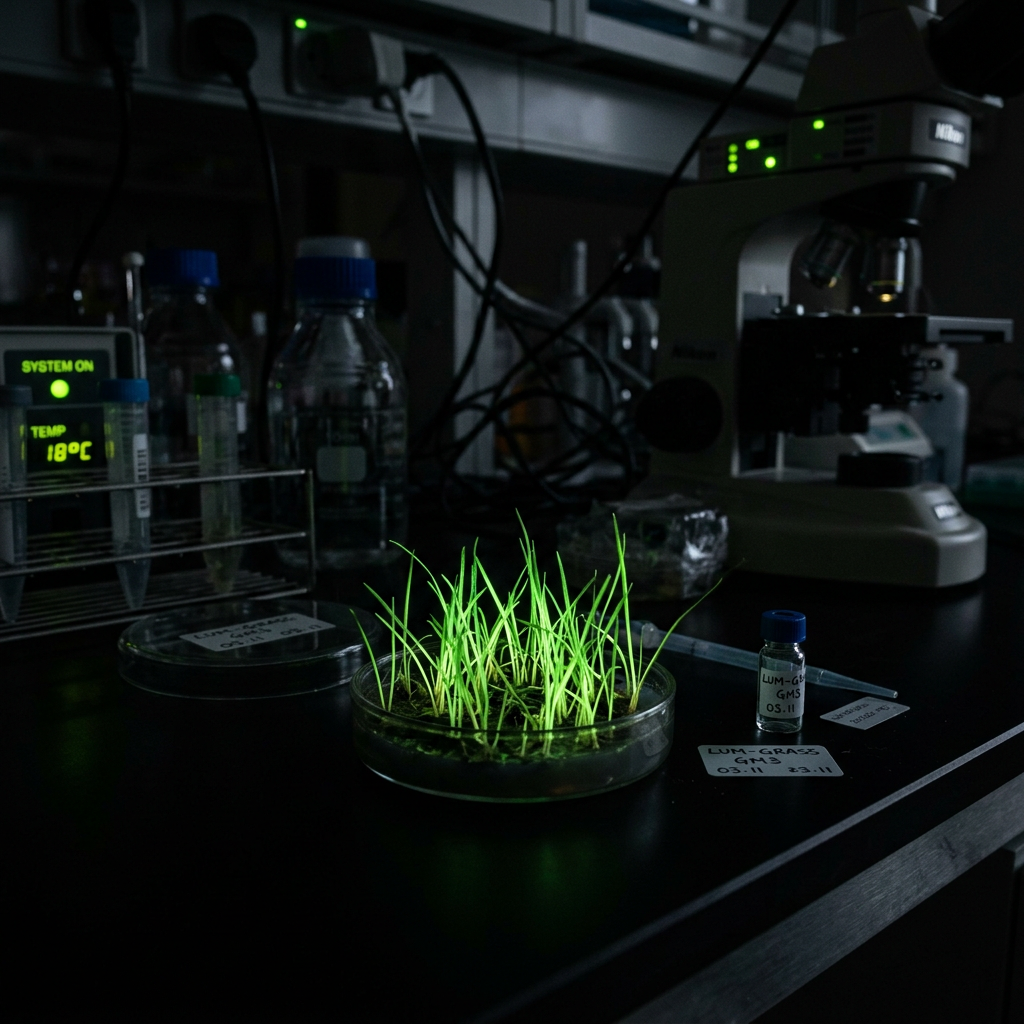
It is hard to understand how grass stems grow because it happens inside the plant. To figure this out researchers created an imaging system that can watch the stem develop in real time.
They took a type of grass called purple false brome. Modified it to glow when a certain gene is active. This gene is important for growth. When it is active the plant emits a faint light. Researchers used this to take pictures of the plant growing which showed when and where the stem was growing.
This was the time scientists could see the genes that make grass stems strong turning on inside a living plant.
Temperature Controls Growth
Researchers tested the plants with combinations of light and temperature. They found that temperature controls how fast the stem grows, not light.
The plants grew faster when it was cool at night and slower when it was warm during the day. If it got warm for a little while at night the plant grew really fast.. If it got cool for a little while during the day the plant grew slower.
Scientists also found that cold temperature made the plant’s cell walls weaker at first but if it stayed cool for a time the cell walls got stronger. Warm temperatures did the opposite.
This shows that grasses have a way of growing that involves balancing when to grow and when to stop.
Hidden Biological Mechanism
Researchers found a special process called an incoherent feed-forward loop. This means that temperature does two things at the same time. It makes the plant grow. It also slows down the growth later.
Mathematical models showed that this process helps grasses adjust their growth based on the temperature. Unlike plants that rely on sunlight, grasses pay attention to temperature to decide when to grow stronger stems.
This might be why grasses can grow in many different climates around the world.
Climate Change Questions
This study was about understanding how plants grow. It could also help with agriculture. The Earth’s temperature is. Nighttime The temperature is rising faster than daytime temperature. Since grasses rely on temperature This could change how crops like wheat, rice and corn grow.
Researchers need to do studies to figure out exactly how climate change will affect food production.. Understanding how grasses grow is an important step towards breeding plants that can handle changing environmental conditions.
The new imaging technique could also help scientists study important processes in crop development. The study shows that familiar plants, like grasses can still have secrets. By finding out that grasses grow based on temperature Not light researchers have opened up an area of study that could lead to more resilient crops and better food security in a warming world.