Last Updated on May 28, 2026 by Staff
Scientists have finally figured out a centuries-old mystery about green gemstones buried with ancient leaders in Panama. For over 1,000 years archaeologists thought the green stones found in tombs were emeralds but they didn’t have any proof until now.
A new study in Latin American Antiquity says the stones are Colombian emeralds. This discovery shows that complex trade networks connected societies across Central and South America long before Europeans arrived.
Researchers used scientific techniques like X-ray fluorescence, infrared spectroscopy and photoluminescence to examine five rare green stones from archaeological sites on Panama’s Pacific coast.
The findings provide evidence that emeralds traveled over 700 kilometers through ancient trade routes connecting Colombia and Panama. This is a deal because it shows how far-reaching these trade networks were.
Elite Tombs and Precious Stones
The emeralds were found at two archaeological sites called El Caño and Sitio Conte in the Gran Coclé region of Panama. These burial sites date back to around AD 800 to 1000. Were used for powerful chiefs and elite members of society.
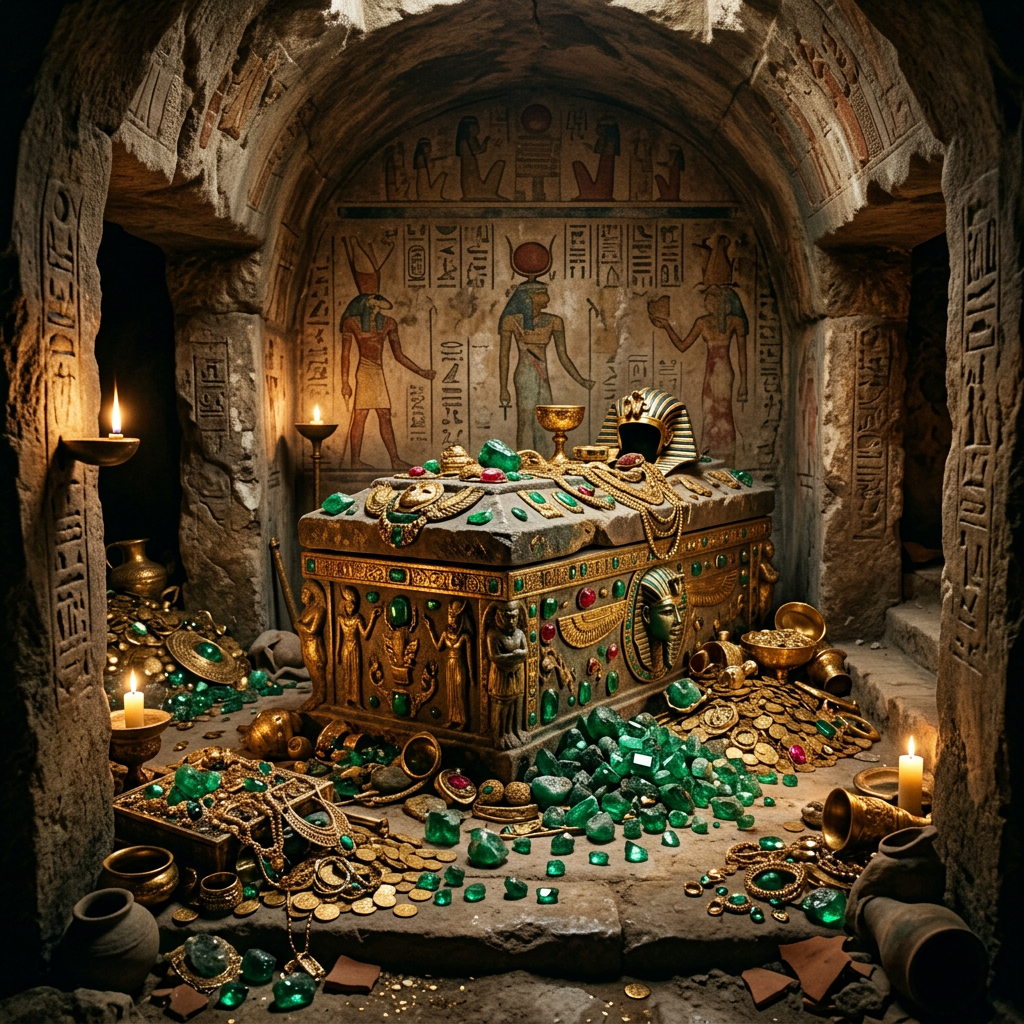
The tombs had treasures like gold ornaments, pyrite mirrors, fossilized megalodon shark teeth and decorated jewelry. Among these artifacts were rare green stones mounted on valuable objects like gold pendants and copper decorations.
Eight emerald-like stones have ever been found in the Coclé region making them extremely rare. Scientists wanted to know if the stones really came from emerald mines and where they came from.
Emeralds from Colombia
To solve the mystery researchers compared the stones with known emeralds from Colombia and Ecuador. Their analysis showed that all five stones matched the chemical signatures of emeralds.
The emeralds likely came from Colombia’s Western Emerald Belt, home to the historic Muzo mines as well as the Eastern Emerald Belt near Chivor. This discovery makes the Panamanian emeralds the known example of emeralds in the pre-Columbian Americas.
According to lead researcher Dr. Carlos Mayo Torné the emeralds probably didn’t arrive in Panama through trade between miners and local leaders. Instead they likely moved gradually through a “down-the-line” exchange system.
In this type of trade network goods pass through communities over time. Coastal villages, river settlements and traders likely exchanged the emeralds repeatedly until they eventually reached Panama. This process took a long time and involved many people.
Local Craftsmanship and Repairs
The researchers also found evidence that some emeralds may have been modified by Panamanian artisans after arriving in the region. Some stones had signs of drilling attempts and reshaping. Drilling emeralds is extremely difficult because the crystals can crack easily with ancient tools.
Despite damage to stones the artifacts were still preserved and buried alongside elite individuals. This suggests the emeralds held symbolic importance. They represented power, prestige and political influence.
The willingness to repair emeralds instead of discarding them shows how valuable these gemstones were to ancient Coclé society. People were willing to go to lengths to preserve these stones.
Trade Networks Begin to Fade
Interestingly the use of emeralds and other imported luxury goods disappeared from Panama around AD 1000. Other foreign prestige items, including pyrite mirrors also vanished during the period.
Scientists think this change may reflect the decline of the chiefdom’s political and trading influence. It may also coincide with the end of burial practices in the region. This marks a shift in the region’s history.
The study not confirms the existence of emerald trade in ancient Panama but also highlights the sophistication of pre-Columbian trade systems across the Americas. This is a discovery that sheds new light on the region’s past.
Future Research Ahead
Researchers now hope to identify the trade routes used to transport the emeralds across such vast distances. Future studies may combine evidence with advanced mapping techniques to better understand how ancient societies exchanged valuable materials.
The findings reveal that long-distance trade, political alliances and luxury goods played a role in ancient American civilizations centuries before European arrival. This is a glimpse into the interconnected world of pre-Columbian societies and the incredible journeys these emeralds once made across the Americas.