Last Updated on May 10, 2026 by Staff
Perovskites are really exciting for energy. They have a crystal structure that helps turn sunlight into electricity very well. Some scientists think they might replace silicon solar cells because they are cheap to make, light, flexible and super efficient.
Perovskite solar cells still have a big problem. They lose performance over time because of issues and defects inside their crystal layers. So getting both efficiency and long-term durability is a goal in solar technology research.
Now researchers from Korea University, the University of Toledo and Seoul National University have found a way to solve some of these problems. Their findings, published in Nature Energy show that controlled interactions between two types of perovskite materials can create highly ordered films with fewer defects. This leads to efficient and stable solar cells.
Crystal Perfection
The performance of solar cells really depends on the quality of the thin films used inside them. These films need to have an organized atomic structure so electricity can move through them easily.
When there are imperfections or defects in the crystal structure they create trap states that waste energy and reduce efficiency. Defects can also trigger unwanted phase changes that damage the material over time.
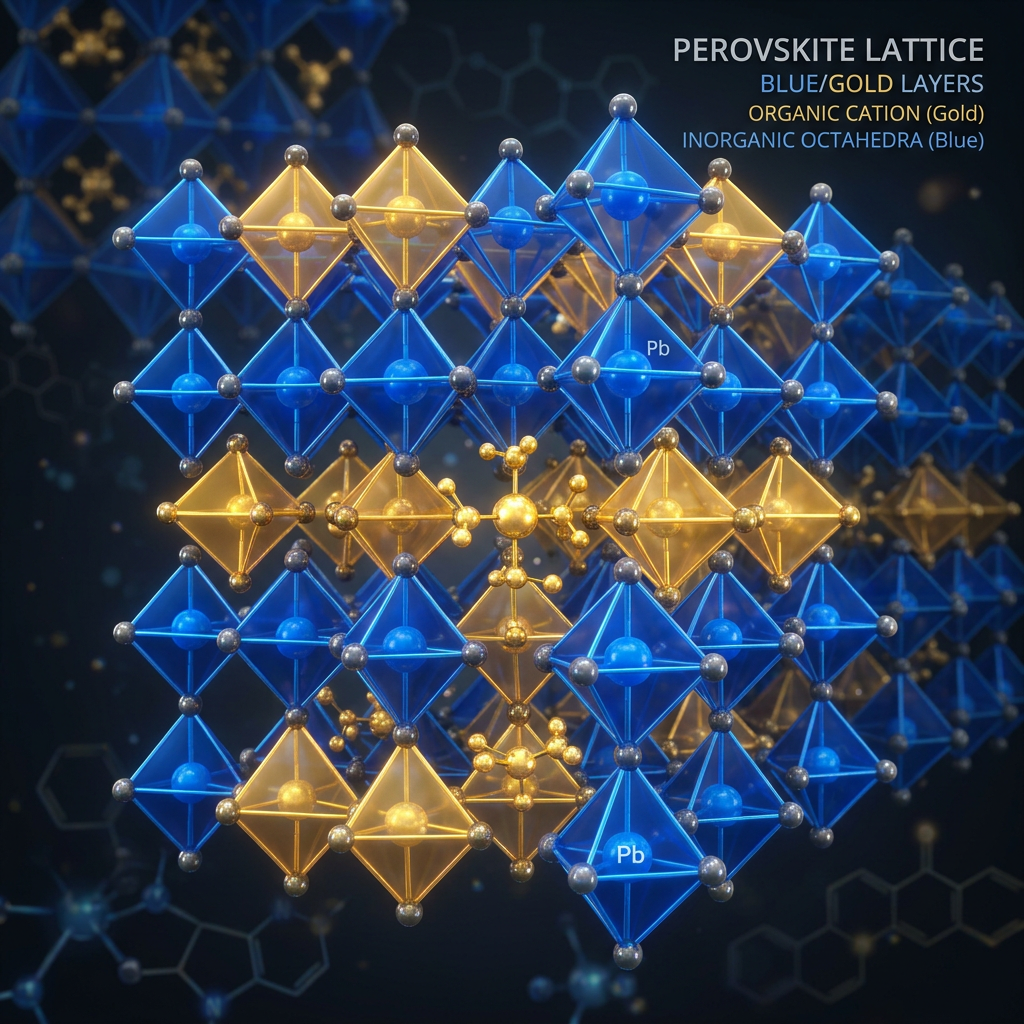
To tackle this problem the research team explored the interaction between two- three-dimensional halide perovskites.
Two-dimensional perovskites are known for being stable while three-dimensional perovskites absorb sunlight efficiently. Scientists hoped that combining the advantages of both structures could improve cell performance.
The researchers specifically worked with a material called FAPbI₃. It’s one of the important perovskites for high-efficiency solar cells but also one of the most difficult to stabilize properly.
An Unexpected Effect
While studying how the two materials interacted the researchers made a discovery.
Just placing the two- three-dimensional layers into contact changed the optical behavior of the material underneath. The three-dimensional layer emitted light differently after contact before heat or pressure was applied.
The scientists found that this effect came from interactions between molecules inside the two materials. These contact-induced interactions temporarily improved the structure of the perovskite layer.
To make the improvements permanent the team added a controlled treatment after the layers touched. Heat provides energy that allows the crystal structure to reorganize into a more ordered and stable form.
The result was a refined perovskite film with crystal properties close to ideal theoretical values.
Researchers say the method works without the need for additives. These additives are commonly used in perovskite research. It may sometimes reduce long-term stability.
Stronger Solar Cells
To test the real-world impact of their method the scientists built working cells using the improved perovskite films.
The results were impressive. The solar cells achieved efficiencies of 26.25%. This puts them among the performing perovskite solar cells developed so far. More importantly they demonstrated excellent long-term stability.
Under testing conditions the devices maintained operation for around 24,000 hours. This is a step forward because instability has long been one of the biggest barriers preventing perovskite solar cells from entering large-scale commercial use.
The improved films also resisted phase transitions that normally weaken FAPbI₃ materials over time.
According to the researchers, achieving a perfect crystal structure is critical for creating durable and reliable perovskite technology.
Looking Ahead
The team believes their contact-induced crystallization strategy could open possibilities for future solar technologies.
One major advantage is scalability. The process could potentially be adapted for large-area manufacturing while maintaining crystal quality and fewer defects.
Researchers are also interested in applying the method to tandem cells. These cells combine layers of materials to capture more sunlight and achieve even higher efficiencies.
These tandem systems often require low-temperature processing. This makes proper crystal formation difficult. The developed approach may help solve this issue by improving crystal growth even under limited heating conditions.
Beyond energy the discovery also introduces a completely new understanding of how two-dimensional and three-dimensional perovskite materials interact with each other.
Scientists now hope to improve the technique using even more perfect crystal layers. This could push perovskite technology closer to reality.
If successful this breakthrough could help create a generation of affordable highly efficient and long-lasting solar cells. These solar cells could transform energy worldwide.