Last Updated on July 23, 2026 by Staff
Cancer immunotherapy has revolutionized cancer treatment by helping the body’s immune system identify and destroy tumor cells. Although these therapies have significantly improved survival rates for many patients, they are not effective for everyone. Some patients fail to respond to treatment from the beginning, while others gradually develop resistance. Understanding why these differences occur has become one of the biggest challenges in modern cancer research.
Now, scientists from Nagoya University in Japan have identified an ancient immune protein called Complement C3 that may hold the key to improving immunotherapy. Their study, published in Nature Communications, reveals that C3 enhances cancer treatment only when it is produced directly inside tumors. Surprisingly, the same protein circulating in the bloodstream has almost no impact on treatment success. The discovery opens the possibility of developing more personalized cancer therapies and overcoming resistance to immunotherapy.
Ancient Protein
Complement C3 is one of the oldest components of the immune system. It has existed for hundreds of millions of years and is found even in primitive organisms such as jellyfish and sponges. In humans, C3 is primarily produced by the liver and released into the bloodstream, where it helps protect the body against bacteria, viruses and other harmful pathogens.
While researchers have long understood the importance of circulating C3 in fighting infections, little was known about the role of C3 produced locally inside body tissues. The research team wanted to investigate whether C3 generated within tumors could influence how the immune system responds to cancer and whether it affects the success of immunotherapy treatments.
Tumor Discovery
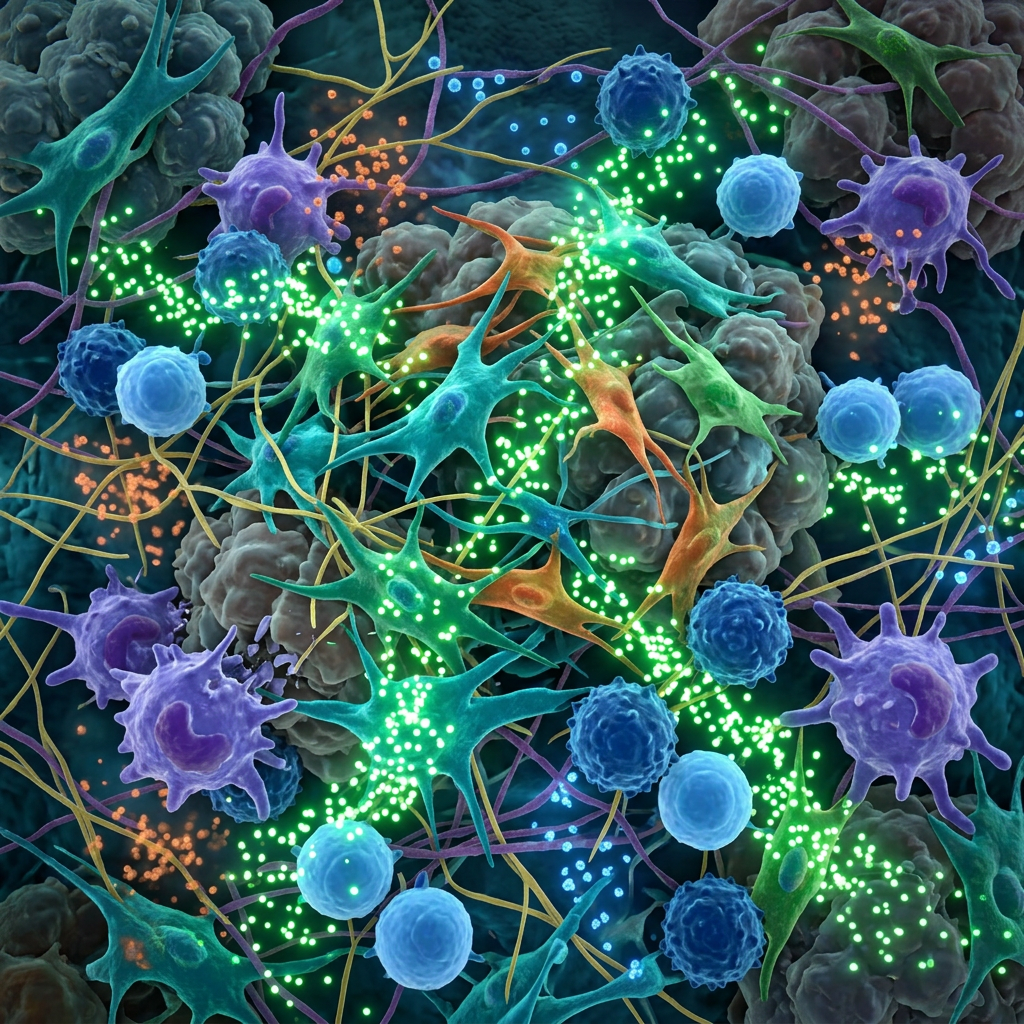
The study focused on Cancer-Associated Fibroblasts (CAFs), which are normal connective tissue cells surrounding tumors. These fibroblasts were found to produce Complement C3 directly inside the tumor microenvironment.
Researchers discovered that locally produced C3 prevents immunosuppressive myeloid cells from entering and accumulating around tumors. These myeloid cells normally weaken the body’s immune response, allowing cancer cells to grow without being attacked.
When C3 blocks these suppressive immune cells, cancer-fighting immune cells become much more active. This creates an environment where immunotherapy drugs can work far more effectively. According to the researchers, local C3 acts as a natural regulator that helps the immune system recognize and eliminate tumor cells more efficiently.
Blood vs Tumor
To determine whether blood C3 played a similar role, scientists carried out experiments using mice. They reduced liver-produced C3 by nearly 90%, dramatically lowering the amount of C3 circulating in the bloodstream.
Despite this reduction, immunotherapy remained just as effective, demonstrating that blood C3 has little influence on treatment outcomes.
However, when fibroblasts inside tumors were prevented from producing C3, immunotherapy became significantly less effective even though blood C3 levels changed only slightly.
The researchers concluded that the location of C3 production is far more important than its overall quantity. They also discovered that C3 breaks down into a fragment called iC3b, which blocks harmful myeloid cells from entering tumors. This process creates favorable conditions for immune cells to attack cancer and explains why locally produced C3 is critical for successful treatment.
Better Treatment
The research team then explored whether they could recreate the beneficial effects of C3 in tumors that naturally produce low levels of the protein.
They tested a drug designed to mimic C3’s ability to block suppressive myeloid cells. The results were highly encouraging. Tumors that had previously resisted immunotherapy became responsive, and treated mice survived significantly longer than those receiving immunotherapy alone.
The scientists also examined lung cancer tissue samples from patients. Those whose tumors contained higher levels of locally produced C3 responded much better to immunotherapy and had improved survival rates. Interestingly, blood C3 levels showed no relationship with patient outcomes, reinforcing the importance of local C3 production within tumors.
Future Outlook
The findings suggest that Complement C3 could become both a biomarker and a therapeutic target in cancer treatment. Measuring C3 levels inside tumor tissue may help doctors identify which patients are more likely to benefit from immunotherapy.
Researchers are now working on methods to increase C3 production directly within tumors and determine the most effective timing for combining this strategy with existing immunotherapy drugs.
Beyond cancer, understanding the tissue-specific role of Complement C3 may also improve knowledge of wound healing, inflammation and other immune-related diseases. If future clinical studies confirm these results, this ancient immune protein could become an essential component of next-generation personalized cancer therapies, offering new hope to patients whose cancers currently resist treatment.