Last Updated on July 2, 2026 by Staff
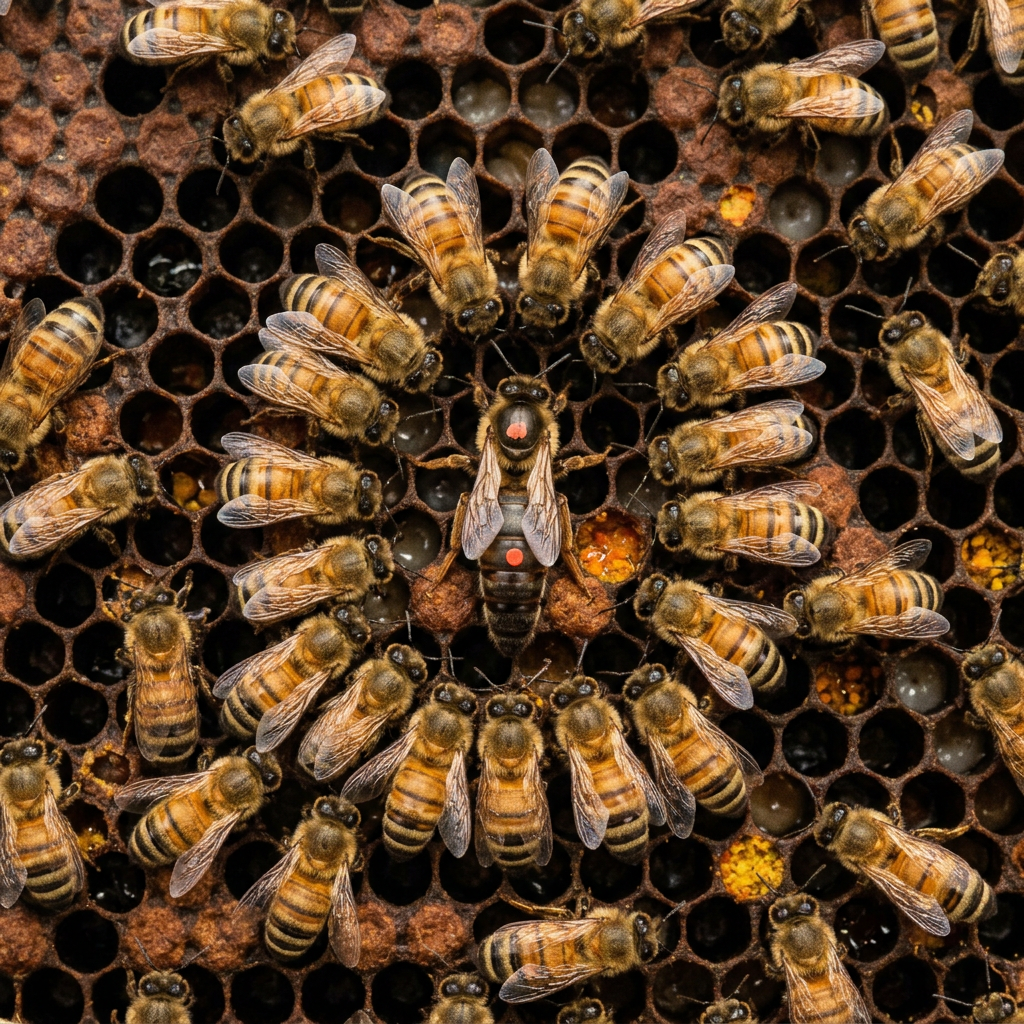
Honeybee queens have developed a surprising survival strategy when exposed to pesticides. Instead of allowing toxic chemicals to build up inside their own bodies, they transfer those contaminants into their eggs—a process scientists call maternal offloading. While this helps protect the queen, it could have serious consequences for the future of the colony.
The groundbreaking discovery was made by researchers from the University of California, Davis, in collaboration with Lawrence Livermore National Laboratory (LLNL) and the U.S. Department of Agriculture’s Agricultural Research Service (USDA-ARS). The findings, published in the journal Current Biology, provide the first direct evidence that honeybee queens use this mechanism to survive long-term pesticide exposure.
Scientists believe this hidden process could contribute to gradual colony decline, raising new concerns about how pesticides affect one of the world’s most important pollinators.
A Hidden Defense
Worker bees are known as the colony’s primary defenders against contamination. They collect food, process nectar and pollen, and filter harmful substances before feeding the queen. For years, scientists believed this worker filtration system provided complete protection for the queen.
However, the new study reveals that this protection has limits.
As pesticide exposure continues over time, worker bees become less capable of filtering out toxic chemicals. Once their natural defense system becomes overwhelmed, pesticides begin accumulating inside the queen herself.
To avoid poisoning, the queen activates her own defense strategy by transferring the contaminants into the eggs she lays.
Researchers describe this process as maternal offloading, where toxic substances are removed from the queen’s body and deposited into developing eggs.
Although this helps the queen survive, the developing offspring may suffer the consequences.
Tracking the Chemicals
To investigate how pesticides move through a colony, researchers designed miniature experimental colonies known as nanocolonies.
Each nanocolony contained one queen and approximately 60 worker bees inside specially designed containers that replicated important hive functions.
The bees received pollen, water and food containing environmentally realistic levels of the pesticide methyl parathion. The pesticide was marked with a harmless radioactive tracer, allowing scientists to precisely follow its movement throughout the colony using advanced detection technology. On the first day of exposure, worker bees successfully filtered about 95% of the pesticide before it reached the queen.
But after ten days of continuous exposure, that efficiency dropped to around 86%, allowing significantly more contamination to enter the queen’s body.
This gradual decline demonstrated that worker bees cannot indefinitely shield the queen from chronic pesticide exposure.
A Threat to Future Generations
The discovery becomes especially concerning because a honeybee queen is responsible for producing the colony’s entire future workforce.
A healthy queen can lay between 1,500 and 2,000 eggs every day, ensuring the survival and growth of the hive.
When pesticides accumulate inside her eggs, scientists worry they may interfere with embryo development, resulting in weaker offspring or eggs that fail to hatch altogether.
Researchers suggest this could create a slow but dangerous decline in colony health.
Unlike sudden poisoning events, this process may remain unnoticed for long periods while pesticides continue accumulating across generations.
Scientists believe there may eventually be a tipping point where contaminated eggs can no longer develop properly, contributing to delayed colony collapse.
Because the queen is the colony’s only egg-laying individual, any disruption to her reproductive success threatens the survival of the entire hive.
Why the Discovery Matters
Honeybees play a critical role in global agriculture by pollinating approximately one-third of the world’s food crops.
Healthy colonies are essential for producing fruits, vegetables, nuts and many other foods that depend on insect pollination.
The new findings suggest that pesticide exposure should be considered not only for worker bees but also for queens and developing offspring.
Researchers believe the results could influence how beekeepers, farmers and integrated pest management specialists schedule pesticide applications, particularly during periods when colonies are expanding or actively foraging.
Reducing pesticide exposure during these sensitive stages may help limit long-term contamination inside hives.
The study also highlights the importance of evaluating the entire colony rather than focusing only on worker bees when assessing pesticide safety.
Questions for Future Research
Although the discovery answers an important question about queen survival, many mysteries remain.
Scientists still need to determine how long queens continue transferring pesticides into their eggs and whether different pesticides produce similar effects.
Researchers also want to understand how maternal offloading influences colony health over multiple generations and whether contaminated offspring are more vulnerable to disease or environmental stress.
Advanced tracking methods developed through collaboration with Lawrence Livermore National Laboratory made this research possible by allowing scientists to detect extremely small pesticide concentrations that closely match real-world conditions.
The researchers hope future studies will help develop safer pesticide practices that protect both honeybee queens and the colonies that depend on them.
As concerns about declining bee populations continue worldwide, understanding these hidden biological defense mechanisms may become an important step toward protecting pollinators and ensuring global food security.