Last Updated on May 19, 2026 by Staff
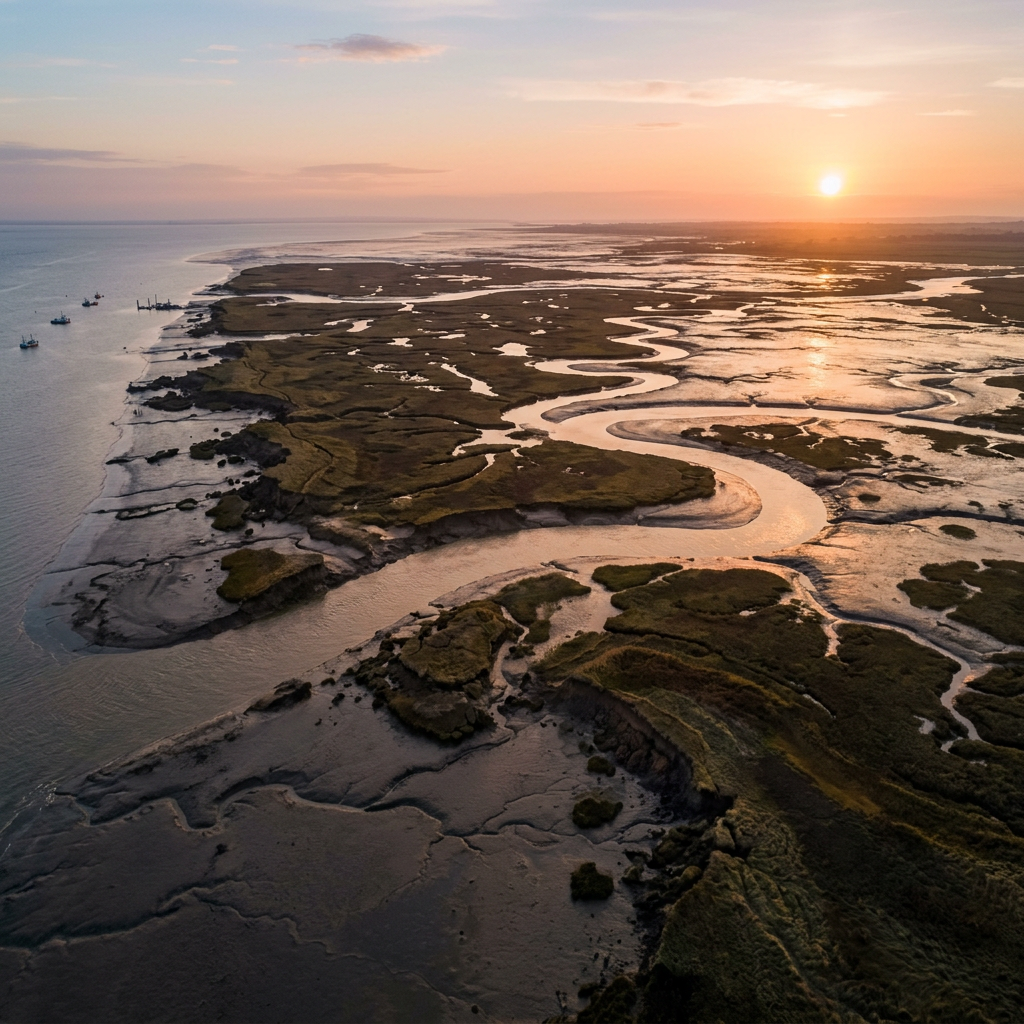
Tidal wetlands are really important for our planet. These coastal areas include marshes, mangrove forests and tidal flats that exist where land meets the sea. They help protect communities from flooding and storms, support wildlife, make water cleaner and store a lot of carbon dioxide.
Scientists often call wetlands natural climate defenders because they absorb carbon from the air and reduce coastal erosion. These valuable ecosystems are disappearing fast because of climate change and human activity.
A new study in Nature Communications shows that tidal wetland loss in the United States has been speeding up over the past 40 years. Researchers found that extreme weather events like hurricanes and storms are now a reason for this destruction.
The study was led by Xiucheng Yang and Zhe Zhu researchers who specialize in remote sensing and satellite monitoring.
Tracking Wetland Loss
For a time scientists thought rising sea levels were the main cause of tidal wetland decline. While sea level rise still plays a role the new research shows that storms are increasingly responsible for the accelerating loss.
To investigate these changes the research team looked at 40 years of satellite data covering wetlands in the United States. They developed a monitoring system called DECODE, which stands for Detection and Characterization of Coastal Tidal Wetlands.
Studying wetlands is hard because shorelines constantly change with the tides. Traditional mapping systems often struggle to determine when wetlands disappear and what caused the damage.
The DECODE system helped researchers track wetland changes accurately over time. By comparing satellite images with weather records scientists could directly connect wetland destruction to specific hurricanes and extreme storms for the first time.
This breakthrough allowed the team to separate storm-related damage from slower long-term threats like sea level rise.
Storms Take Over
The study found that since 1985 the United States has lost over 1,600 kilometers of tidal wetlands, which is more than 7.5% of the country’s total tidal wetland area.
The speed of wetland loss is increasing every year. Researchers discovered that while gradual factors like rising seas still account for overall damage extreme weather events are now driving the accelerating loss.
According to the study storms contribute 1.4 times more to the accelerating loss rate than term environmental stressors. Climate change is making hurricanes and coastal storms more frequent and intense. These powerful events can destroy wetland vegetation erode coastlines and prevent ecosystems from recovering
Regional Differences
Wetland loss is not happening equally across the United States. Some regions are facing greater threats than others.
The Gulf Coast has experienced the rates of tidal wetland decline. Researchers say this is caused by a combination of rising sea levels and increasingly severe hurricanes affecting the region.
Meanwhile some areas are seeing changes. In San Francisco Bay tidal wetland areas have actually increased due to restoration efforts and the region’s relative lack of hurricanes.
The study also revealed that certain ecosystems are adapting to climate pressures. Mangrove forests, which are more resistant to storms and rising seas, are expanding into regions previously dominated by marshes. This shift is happening in parts of Florida, Louisiana and Texas.
Need For Action
Researchers say the findings highlight the need for better coastal management and restoration strategies.
Historically tidal wetlands could often recover naturally after storms. However the increasing intensity and frequency of hurricanes are now overwhelming these ecosystems.
The scientists argue that waiting for wetlands to heal on their own may no longer be enough. Instead coastal communities and governments may need to restore damaged wetlands after major storms to prevent permanent losses.
Healthy wetlands provide benefits for both people and nature. They reduce flood risks, protect coastlines, support fisheries and help slow climate change by storing carbon.
Losing these ecosystems could leave regions more vulnerable to rising seas and severe weather, in the future.
The study serves as a warning that climate change is reshaping America’s coastlines faster than many scientists expected. Without conservation and restoration efforts tidal wetlands may continue disappearing at an accelerating pace.
Researchers hope their new monitoring system will help governments respond quickly to wetland damage and develop smarter strategies to protect these vital ecosystems before it is too late.