Last Updated on May 16, 2026 by Jaspreet Kaur
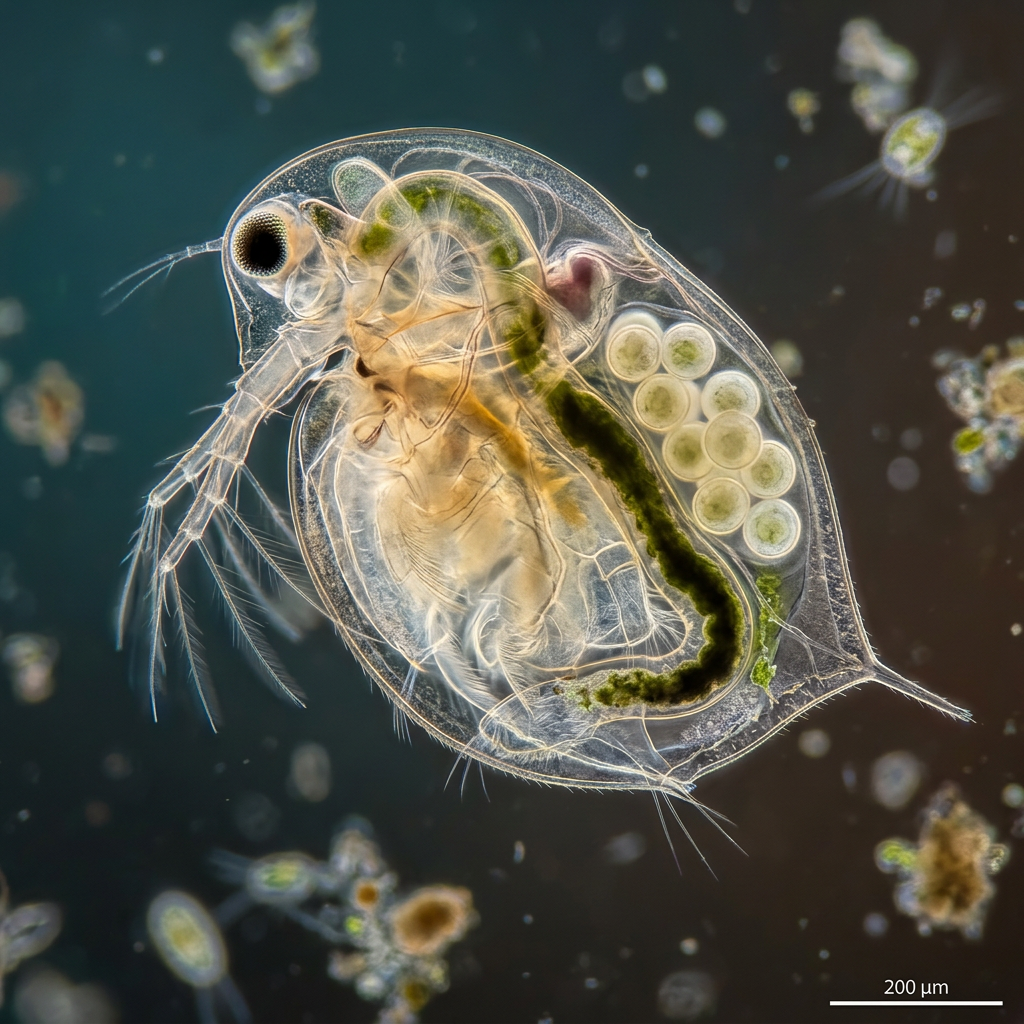
Daphnia or water fleas are small creatures that live in freshwater. You can find them in ponds and lakes around the world. Even though they are small they have developed some cool ways to stay safe from things that want to eat them. When they sense that something is wrong they can change the way they move or even change the shape of their bodies to protect themselves.
Some water fleas even grow helmets or get bigger when they know that predators are around. This helps them avoid being eaten by fish and other things that live in the water.
Scientists have known for a time that water fleas can detect predators because of the special chemicals that they release into the water. They did not know exactly how this worked. Now some researchers at Ruhr University Bochum have found the receptors that help Daphnia detect danger.
The researchers wrote about their findings in the Proceedings of the Royal Society B. This is a deal because it helps us understand how creatures communicate with each other in the water.
Chemical Signals
In the water many creatures use chemical signals to talk to each other by making sounds or using visuals. When predators are around they release chemicals into the water and the water fleas can detect these chemicals.
Water fleas use parts called antennules to smell the chemicals in the water. The researchers looked at some proteins called ionotropic receptors. These proteins help turn the chemical signals into signals that the water fleas can understand.
The researchers looked at two proteins called IR25a and IR93a. These proteins are very important because they help the receptors work properly. Without them the receptors cannot detect the chemicals in the water.
The person in charge of the research Linda C. Weiss said that scientists have been trying to understand how water fleas detect predators for a time. Her team wanted to know which receptors help Daphnia detect the chemicals that mean danger.
Gene Experiments
To figure out how the receptors work the researchers used a technique called RNA interference. This technique helps turn off genes in the water fleas.
The researchers turned off the genes that control the IR25a and IR93a proteins. Then they put the water fleas in water with chemicals from predators. Normally the water fleas would change their behavior or body shape. When the receptors were not working they did not do anything.
The results showed that the water fleas need the IR25a and IR93a receptors to detect the chemicals from predators. This is a deal because it means that these receptors are very important for the water fleas survival.
It is also interesting that the researchers do not know which chemicals the predators release. They do know that the receptors are very important for the water fleas to detect danger.
The researchers think that the receptors work together in groups. They probably have parts that work together to detect the chemicals in the water.
Ecosystem Impact
This research is important not for understanding water fleas but also for protecting the freshwater ecosystems. Chemical signals are very important for the food chain in the water. They help creatures find food, avoid predators and have babies.
The researchers are worried that climate change and pollution might interfere with these chemical signals. When the water gets warmer or has salt it can change the way the chemicals move through the water.
This can cause problems for the creatures that live in the water. They might not be able to detect danger or respond properly. This can have consequences for the ecosystem.
Understanding how creatures communicate with chemicals can help scientists predict what will happen to the freshwater ecosystems in the future.
Future Research
The researchers want to keep studying how water fleas communicate with chemicals. They also want to find receptors that help detect predators.
They might study how different predators release chemicals and how water fleas adapt to these signals over time. They also want to know if other creatures use receptors.
The researchers think that this study is a step towards understanding how creatures interact with their environment. By learning more about communication scientists can gain insights into biodiversity, ecosystem health and environmental change.
The discovery of these receptors is a deal because it helps us understand how tiny creatures, like water fleas survive in complex ecosystems.