Last Updated on May 5, 2026 by Jaspreet Kaur
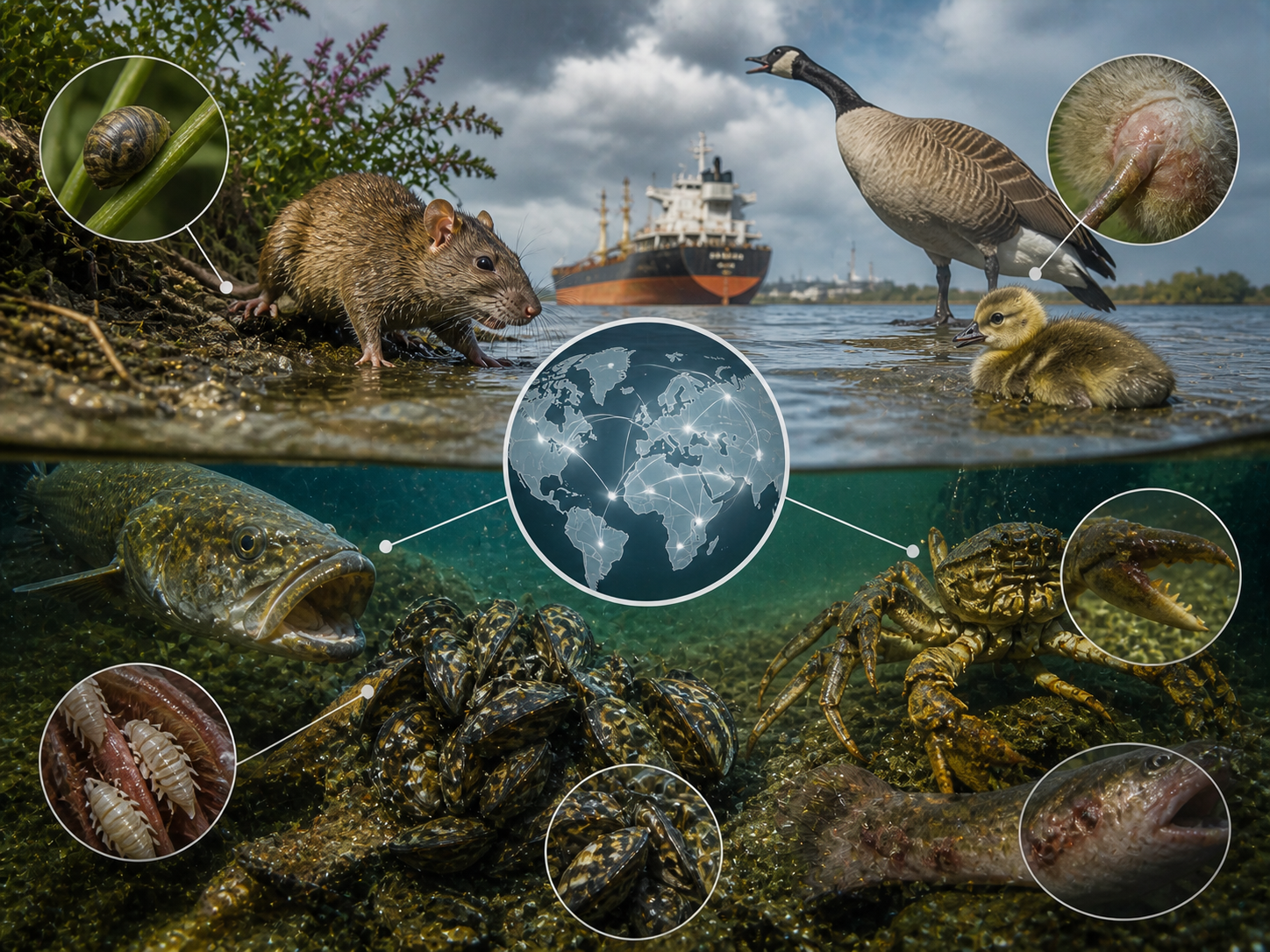
As people travel and trade more animals are being moved to places where they do not belong. These animals can cause problems in the environment, which is called a biological invasion. Scientists have been studying how these invasions affect the variety of animals and plants. A new study is looking at how they affect the welfare of animals.
Researchers from Freie Universität Berlin, the Leibniz Institute of Freshwater Ecology and Inland Fisheries and the University of Bristol have made a tool to help understand how invasive animals affect the health and well-being of other animals.
Beyond Biodiversity
Most of the time people study how biological invasions affect the environment. They look at how many animals are dying or disappearing.. They do not always think about how individual animals are being hurt.
Animal welfare is not just about if animals are alive or dead. It is also about how they’re feeling. Are they stressed? Are they hurt? Are they sick? Invasive animals can make all of these things happen.
The new study is trying to bring attention to these problems and find ways to measure them.
Introducing AWICIS
The researchers made a tool called the Animal Welfare Impact Classification for Invasion Science. This tool helps to figure out how biological invasions affect the welfare of animals.
AWICIS looks at how bad the effects are from a little problem to a big one. It uses things like how animals are acting, how they look and how their bodies are working to figure this out.
For example if an animal is hurt or if it is acting strange or if it has a lot of stress these are all signs that it is not doing well.
A Structured Approach
One good thing about AWICIS is that it gives a way to measure the effects on animal welfare. This helps scientists and policymakers compare situations and decide what to do.
By looking at signs of how animals are doing the tool helps to connect the study of the environment with the study of animal welfare.
It also helps people to think about invasions in a more complete way and to see that they affect not just the environment, but also the animals that live there.
Testing the Framework
The researchers tested AWICIS by using it to look at data on two kinds of animals: ants and birds.
They found that invasive ants, the red imported fire ant, can hurt other animals very badly. Animals like birds, turtles, lizards and crabs get hurt by ants.
These hurts can last a time and even cause death. The animals can also act strangely like not sleeping or cleaning themselves too much.
Comparing Impacts
Invasive birds also hurt animal welfare. Not as badly as ants.
This shows that it is important to think about what kind of animal is causing the problem. Some animals can hurt away while others can cause problems that are not seen right away.
The study also found that not many people are looking at how animalsre feeling inside like their stress levels.
Hidden Suffering
One important thing the study found is that many animals are suffering. It is not seen. If an animal is hurt on the outside it is easy to see. But if it is stressed or sick on the inside it is harder to know.
AWICIS tries to look at all of these signs to get a picture of how animals are doing.
Gaps in Knowledge
Even though AWICIS is a tool the study shows that there is still a lot to learn. Most of the data comes from countries and not from other parts of the world.
This means that we do not know how biological invasions affect animal welfare in places.
The researchers are saying that we need to collect data, especially in places where there are many different kinds of animals and plants.
Implications for Policy
AWICIS can help policymakers make decisions about how to deal with invasive animals. By looking at how animals are being hurt, policymakers can decide what to do to help.
This is also important for thinking about what’s right and wrong and trying to minimize the suffering of animals.
A Call to Action
The researchers are asking scientists over the world to use AWICIS in their work. They made a template to help people collect and share data.
If scientists work together they can get an understanding of biological invasions and how they affect animals.
This will help us to make plans to protect the environment and the animals that live there.
Biological invasions are a problem that is getting worse. They affect the environment in ways. This new study is important because it looks at how invasions affect the welfare of animals.
With tools like AWICIS scientists and policymakers can understand these problems better. Find solutions that are good, for both the environment and the animals.
As people travel and trade more it will be important to think about the hidden costs of invasions and to try to protect both the variety of animals and plants and the welfare of animals.