Last Updated on April 30, 2026 by Jaspreet Kaur
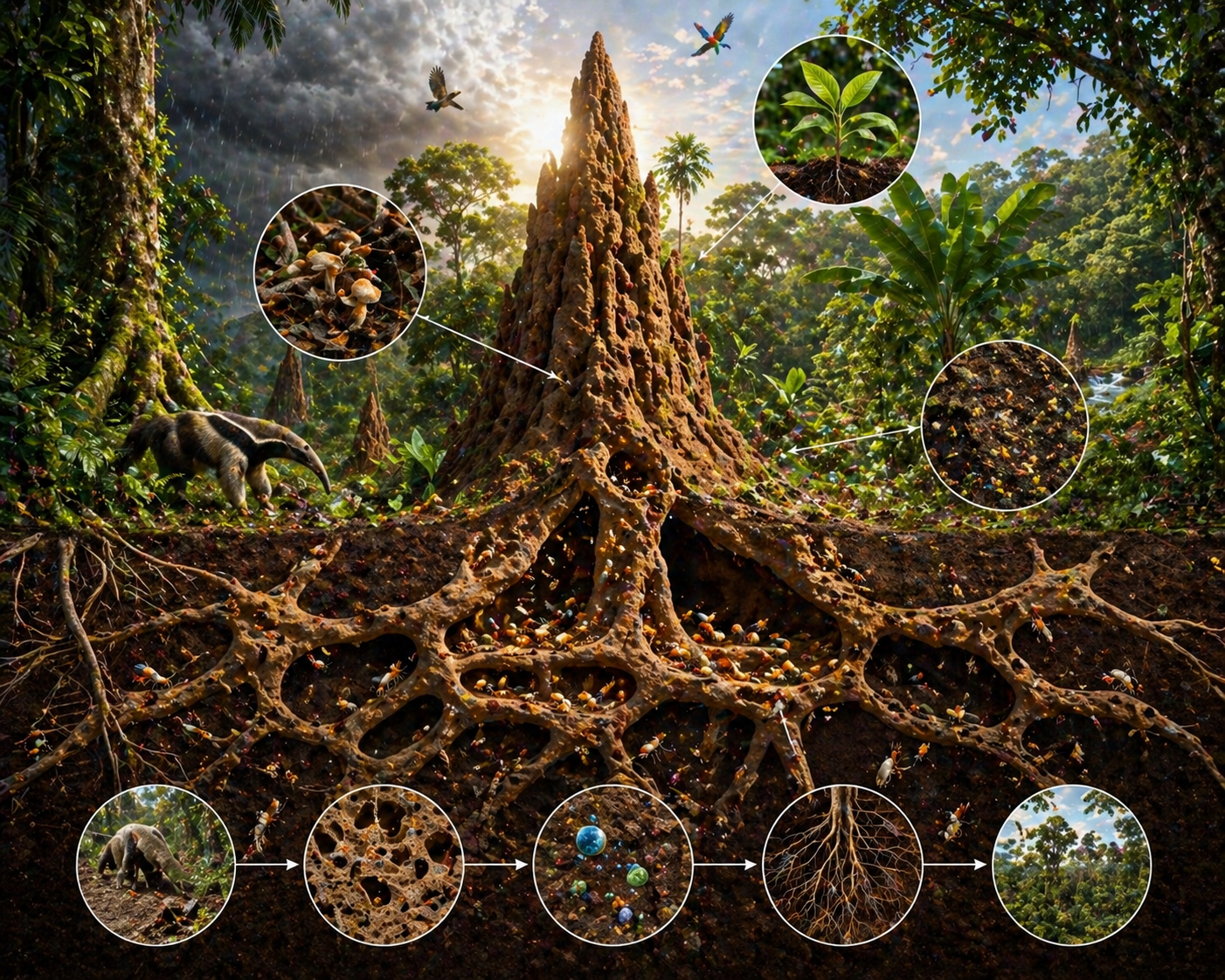
Termites are really important in ecosystems. They help keep everything balanced. These tiny bugs break down plants and turn them into nutrients that go back into the soil. This helps plants grow. When termites dig tunnels they make the soil better so water and air can get to plant roots. Termites are also a part of the food chain. They make up a lot of the animals and plants in the rainforest.
Termites were not always the players they are today. A new study shows how they changed over millions of years.
Evolution revealed
Some researchers from the Okinawa Institute of Science and Technology along with scientists studied how termites evolved across America. They looked at the DNA of all the termite species in the area including over 200 that nobody knew existed. This helped them make a plan of how termites changed over time.
The study shows that termites did not just slowly get better and better. Instead they had two changes that happened about 30 million years apart.
Two turning points
The first big change happened around 66 million years ago when the dinosaurs died out. Many animals went extinct. This also created new chances for other animals to thrive.
The second big change happened 33 million years ago when the Earth got much cooler. This changed a lot of forests into savannas and other kinds of ecosystems.
These changes helped termites adapt and take advantage of chances.
A key innovation
One of the important things that termites developed was the ability to eat soil. This helped some termites thrive in places where there was no food.
Termites that eat soil can get nutrients from the soil, which gives them an advantage. Today most termite species eat soil.
This innovation helped termites spread out after the extinction event. They filled in gaps, left by animals.
Expanding worldwide
Termites probably came from Africa. Now they are found all over the world. Scientists do not know how they got to faraway places like America.
Some termites can travel on floating logs. Soil-eating termites need special conditions. One idea is that they traveled in soil on trees or in plants but this has not been proven.
Massive data effort
The study’s findings are based on a lot of analysis. Researchers looked at the DNA of over 1,700 termite samples. This helped them make a database of termite DNA.
The study also found hundreds of termite species that scientists did not know existed. This information will help in further research.
Surviving upheaval
One important thing we learned is that termites are very good at surviving changes. Both of their evolutionary changes happened during times of big crisis.
Termites can use resources and live in new places, which is why they are so common and important today.
Importance
Termites are essential to tropical ecosystems. They help plants grow, make soil better and keep the ecosystem healthy. Without termites many ecosystems would not work properly.
Even though termites are important, people often see them as pests because they can damage buildings. Most termites are not pests.
Future concerns
Termites have survived changes before. Now they face new challenges. Deforestation, climate change and habitat destruction are changing ecosystems fast.
Scientists think that many termite species may have already disappeared because of activity. Understanding how termites evolved can help us predict how they will respond to changes.
An understanding
This research helps us understand how termites became so important in tropical ecosystems. By studying their evolution we can appreciate their role in keeping ecosystems balanced.
The study also shows how important it is to be resilient and adapt to changes. As humans change the planet we can learn from termites evolution.