Last Updated on July 9, 2026 by Staff
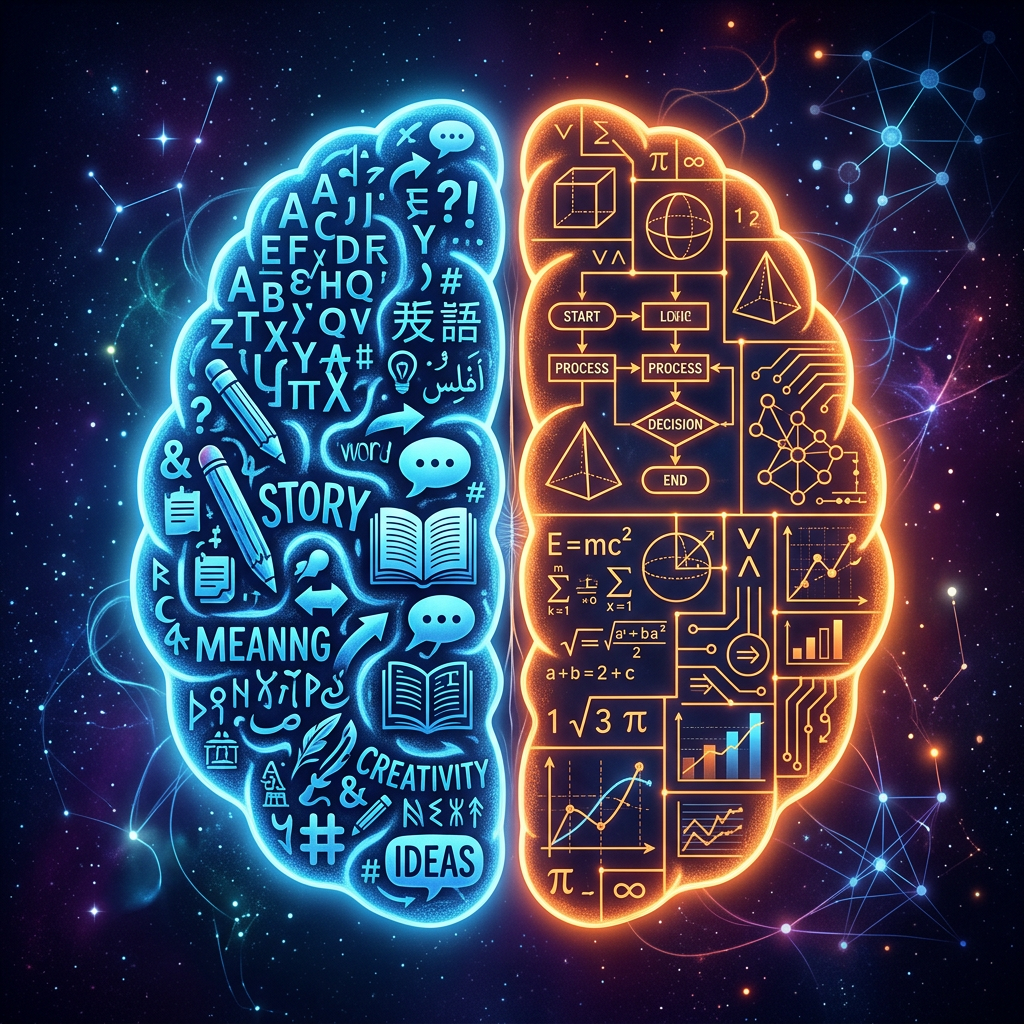
For a time people have wondered if we need language to think. A lot of us talk to ourselves when we are trying to figure something out or make a decision. This made people think that we need language to reason. A new study by researchers at the Massachusetts Institute of Technology (MIT) says this might not be true. The study found that our brain can do logical thinking even when we have trouble with language.
The study was published in the Proceedings of the National Academy of Sciences (PNAS). It shows that our brain uses systems for language and logical thinking. This is news for people who have language disorders like aphasia. It might also help us create artificial intelligence.
Language vs Logic
Language and logical thinking seem connected because they both involve putting pieces of information together to make something bigger. That is why a lot of experts thought language was necessary for thinking.
The MIT researchers did not agree. They said language is important for communicating our thoughts. It might not be what creates them. Logical thinking often requires us to be precise and flexible in ways that language cannot. Language is like a line, one word after another. Logical thinking is like looking at many things at the same time and finding patterns.
To see if reasoning really needs language the researchers created experiments that did not use language.
Testing Stroke Patients
The researchers worked with scientists from University College London to study two patients who had aphasia. These patients had strokes that damaged the parts of their brain that handle language. They could not speak language very well.
The researchers made games that did not use language. They showed the patients sets of numbers. Asked them to find the hidden rules. For example, one rule might change the order of the numbers. The patients had to figure out the rule and then apply it to numbers.
The patients also did puzzles with shapes like IQ tests. They had to find the missing shape to complete a picture.
What is really cool is that the patients solved these puzzles as well as people who did not have language problems. They even explained their answers without using words, gestures and simple drawings.
This shows that our brain can do thinking without language.
Brain Imaging Results
To learn more about which parts of the brain control reasoning the researchers scanned the brains of people using functional MRI.
The people in the study did logic puzzles while in the MRI scanner. They also did language tasks so the researchers could see which parts of their brain handled language. The scans showed something. When the people were doing logic puzzles the language part of their brain was not very active.
Instead other parts of the brain were working. The researchers looked at the “multiple demand network” , a group of brain areas that help us solve problems. This network was active when the people were doing types of logic puzzles but not as much when they were doing others.
This supports the idea that language and logical thinking use parts of the brain.
Changing Views on Intelligence
This study is important for people who have aphasia and other language disorders.
A lot of people think that if someone has trouble speaking or understanding language they must also have trouble thinking logically.. This study shows that this is not true. Intelligence and reasoning can be just fine even if language is not.
People with aphasia can still do things like solve Sudoku puzzles, play chess and make decisions. The researchers hope this study will help people understand that language disorders do not mean someone is not intelligent.
Impact on AI Research
This study might also change how we create intelligence.
AI systems like ChatGPT and Claude use language to reason. Our brain separates language from logical thought. This means that future AI systems could be better if they did not rely much on language. Researchers think that studying how humans and AI are different could help create advanced artificial intelligence that thinks more like humans.
The MIT team thinks this study is a step in understanding how our brain works. By showing that language is not necessary for reasoning we can learn more about human intelligence and create new possibilities for neuroscience, rehabilitation and artificial intelligence research.