Last Updated on July 1, 2026 by Staff
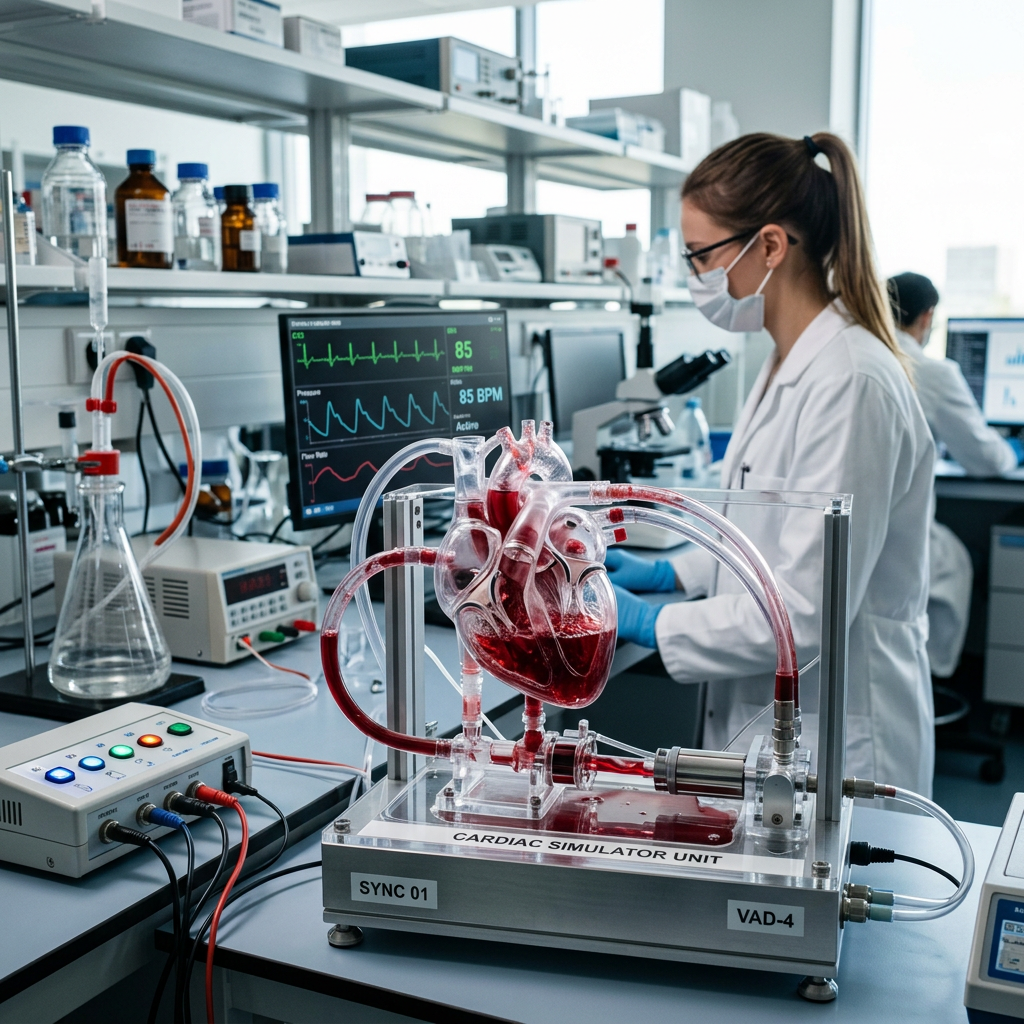
Researchers at UNSW Sydney have made a robotic heart that works like a real human heart. This is a breakthrough for doctors to study heart diseases, test new medical devices and plan complex surgeries without using animals for testing.
The new heart model is fully made up. Reproduces the left side of a human heart. It has parts like valves, papillary muscles and chordae tendineae. These parts are crucial for blood circulation and are often affected by serious heart diseases.
The research was published in Nature Communications Advanced Science. It is a step towards creating artificial heart models that are specific to each patient. This could improve treatment for heart problems in the future.
A Heart That Beats Naturally
The artificial heart is made using silicone materials. It is powered by robotic muscles that imitate the natural movement of a human heart.
The researchers used artificial muscle fibers wrapped around silicone membranes. These membranes recreate the heart’s chambers. The muscles are powered by controlled pressure. This allows the artificial heart to pump fluid like blood circulation.
The left atrium and left ventricle are the chambers that pump oxygen- blood throughout the body. The model also has heart valves that open and close with every heartbeat. This ensures blood flows in the direction.
This design lets scientists study heart mechanics accurately.
Simulating Heart Disease
One of the achievements is reproducing common heart valve diseases.
The researchers designed papillary muscles that control the mitral valve. By adjusting the tension of these muscles they recreated conditions like mitral valve prolapse and mitral regurgitation.
In these diseases the valve fails to close. This allows blood to leak backward or flowing efficiently through the heart. The soft robotic heart accurately reproduced these disease conditions. This enables researchers to observe pressure changes, blood flow patterns and valve movement.
Testing Medical Devices
The artificial heart is also ideal for testing cardiovascular devices.
The researchers tested a developed soft robotic cardiac catheter inside the beating heart model. The catheter navigated through the chambers. It detected contact with moving heart structures.
This testing allows engineers to improve the safety and effectiveness of devices. The model behaves like a heart. It works with clinical imaging techniques like ultrasound.
Reducing Animal Testing
Developing and testing heart devices often requires animal studies. These studies are expensive, time-consuming and raise concerns.
The new robotic heart provides a controlled environment. Researchers can evaluate technologies without relying on animal models.
The researchers demonstrated that the model can reproduce features of Heart Failure, with Preserved Ejection Fraction (HFpEF). This is one of the challenging forms of heart failure to diagnose and treat.
Toward Medicine
The research team believes this technology is just the beginning. Future versions will be created using patients medical imaging data. This will allow doctors to build soft robotic hearts before surgery.
These patient-specific models could help physicians test strategies. They can choose the suitable implants and predict treatment outcomes.
The technology has already shown potential. As researchers refine the materials, control systems and anatomical accuracy soft robotic hearts could become essential in medicine. This innovation may help doctors save lives. It could make heart treatments safer, more effective and tailored to each patient.