Last Updated on June 21, 2026 by Staff
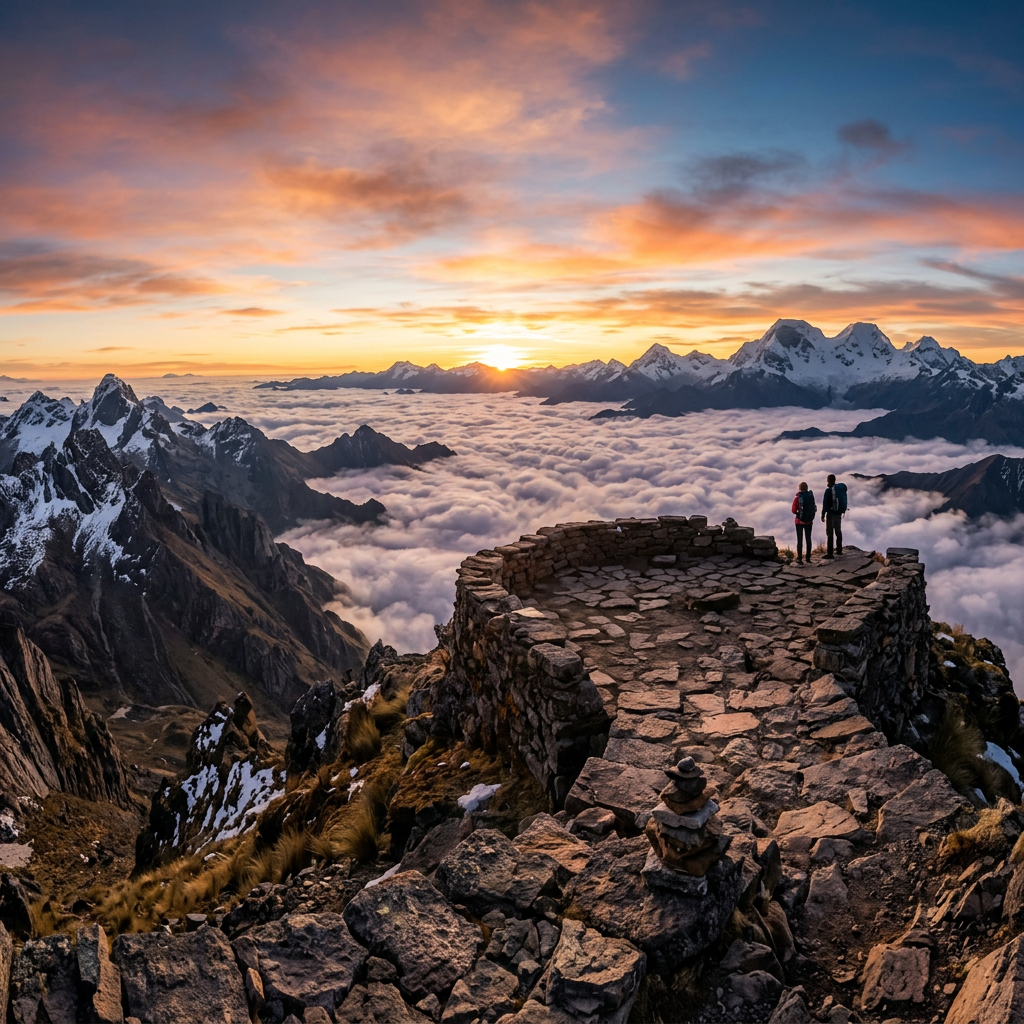
High above the clouds on the summit of Llullaillaco Volcano, near the border of Argentina and Chile archaeologists made one of the remarkable discoveries in South American history. In 1999 researchers found the well preserved mummified remains of three Inca children buried with valuable things. The site is located at an altitude of than 6,700 meters and it became famous as one of the best-preserved examples of the ancient Inca ritual known as Capacocha.
The Inca ritual of Capacocha involved the sacrifice of children and young women as offerings to the gods. For years scientists knew the burial happened sometime during the height of the Inca Empire. They did not know the exact date. They thought it happened between 1430 and 1520 CE, which made it hard to understand the reasons behind the ceremony.
A new study has now helped solve this mystery by looking at plant remains buried with one of the children, which gives a clearer timeline of when the ritual took place.
Plants Tell The Story
Looking at the human remains researchers looked at coca leaves, manioc seeds and maize grains found with the offerings near a 14-year-old girl known as the Maiden.
These plants were good for dating because they do not live long. Unlike trees, which can live for years, these plants get carbon from the air during one growing season. This helps scientists determine their age precisely.
Using special radiocarbon dating and stable isotope analysis researchers looked at the chemical signatures in the plant remains. These techniques helped them figure out when the plants grew and where they may have come from within the Inca Empire.
The study gave a more accurate estimate of when the Capacocha ceremony happened.
A Narrow Timeline
The results showed that the burial likely happened between 1462 and 1507 CE. Statistical analysis suggested that 1489 CE was the likely year for the ritual.
This narrower timeline is important because it puts the ceremony during the time of two Inca emperors: Topa Inca and his son Huayna Capac. Both rulers were in charge during periods of expansion and consolidation within the Inca Empire.
Before some historians thought the sacrifice may have happened right after the Incas conquered the region. However the new dates show that the Inca Empire had already controlled the area for years before the ritual took place.
This finding suggests that the ceremony was not a celebration of a military victory. Instead it likely had purposes, such as religious, political or social reasons within the Inca Empire.
More Than Religion
The Inca Empire was huge. It covered many different landscapes, from the Pacific coastline to the Amazon rainforest. To govern such a territory the Incas needed more than just military power.
Researchers think that rituals like Capacocha may have helped make the communities in the empire more loyal while also making sure everyone shared the religious beliefs. The sacrifices could have been symbols of unity connecting local people to the authority of the Inca emperor and the gods.
Interestingly the new timeline does not match any known eruption, major drought or extreme climate event. This makes it less likely that the ceremony was done because of a disaster.
Instead the evidence points to a complex mix of politics, religion and social things. These ceremonies may have helped keep the empire stable.
Rewriting Inca History
Much of what we know about the Incas comes from accounts written by conquerors after the empire fell. These records often show the perspective of the colonizers. May not fully represent how the Incas saw their own society.
Scientific studies like this one give us a source of evidence that helps historians understand the past more accurately. By looking at plant remains that are more than five centuries old researchers have created a clearer picture of one of the most famous Inca rituals ever discovered.
The findings also show the importance of archaeology in challenging ideas. The Llullaillaco sacrifice appears to have been part of a system that combined religion, politics and culture rather than just being a response to conquest or disaster.
As future excavations find evidence from Inca sites across South America scientists hope to learn even more, about how the Incas governed their vast empire. For now a few old leaves and seeds have helped us learn a part of the story of the Incas and one of their most mysterious ceremonies.