Last Updated on June 10, 2026 by Staff
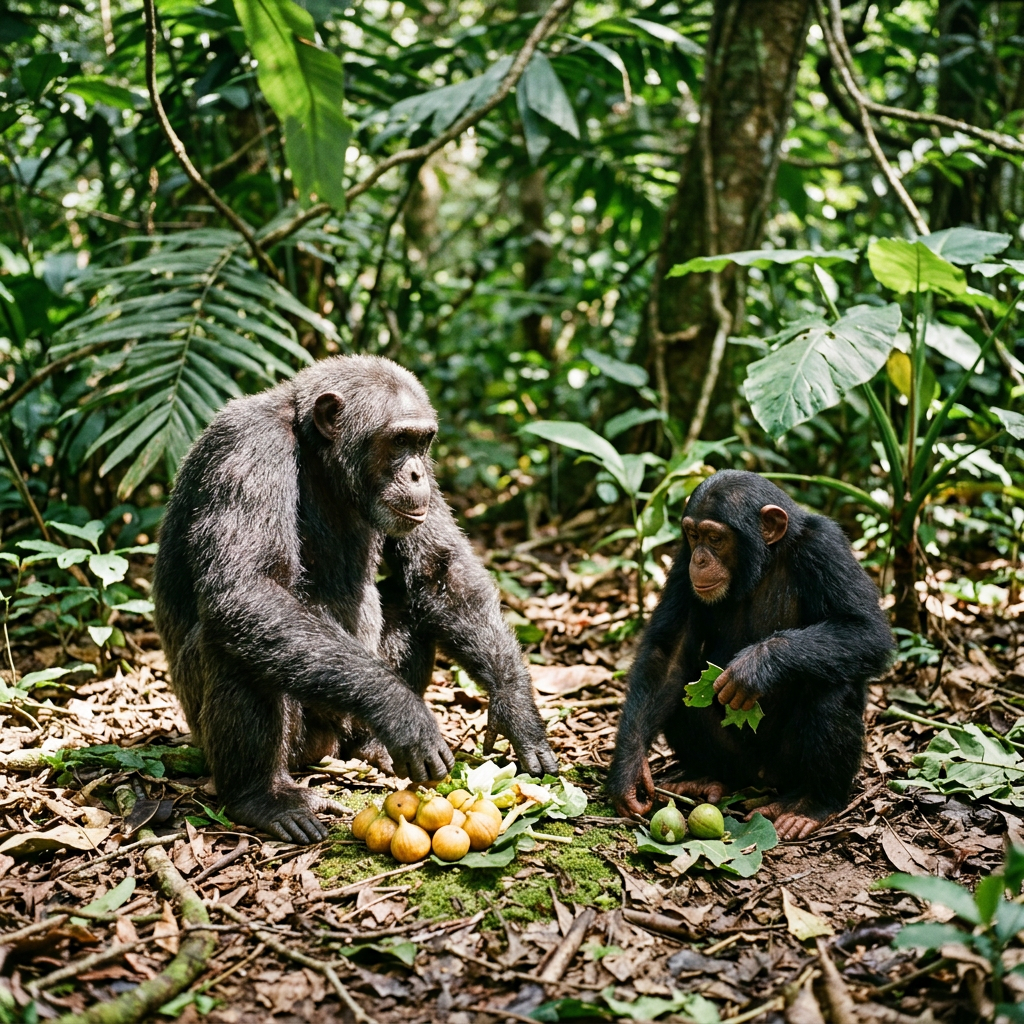
Fairness is very important to people. When people do the work and get different rewards they get upset. Scientists wanted to know if chimpanzees feel the way. Chimpanzees are our relatives in the animal kingdom.
A new study by researchers from Georgia State University and the National Center for Chimpanzee Care found that chimpanzees get upset when they are treated unfairly. What is really interesting is that they get more upset when their close friends are around.
This study was published in Proceedings of the Royal Society B. It helps us understand how chimpanzees think about fairness and how their social relationships affect their behavior.
Beyond Pairs
Most studies about fairness in chimpanzees only looked at two chimpanzees at a time. These studies were helpful. They did not show how chimpanzees really live. Chimpanzees live in groups, not just pairs.
The lead researcher, Mayte Martinez and her team wanted to see how chimpanzees react to treatment in bigger groups. They wanted to know if the type of reward and the social relationships between chimpanzees affect how they react to unfairness.
The study used 27 chimpanzees that lived in groups. Each chimpanzee could trade a token with a human for food. The food was not always the same. Sometimes all chimpanzees got the food and sometimes one chimpanzee got a different food.
Testing Rewards
The researchers chose foods that chimpanzees like. They did not like it very much. They used grapes, which chimpanzees love and carrots or celery, which they do not like much. They also used oranges which’re okay.
The results showed that chimpanzees get really upset when they get a reward that’s much worse than what others get. For example if one chimpanzee gets a carrot and the others get grapes the chimpanzee with the carrot will get upset.
The chimpanzees showed they were upset by not eating the food, throwing it away or giving it back to the human.
It is interesting that chimpanzees do not get as upset when they get a medium-value reward even if others get food. This means that the type of reward is important in deciding whether the chimpanzee thinks the situation is unfair.
The study shows that chimpanzees do not just get upset because they get less than others. They think about whether the difference’s big enough to get upset about.
Friends Change Everything
One surprising thing the study found was that social relationships are very important. The researchers thought that chimpanzees would be more okay with unfairness when their friends were around.
That is not what happened. Chimpanzees got more upset when their friends were around. When their friends were there they were more likely to say no to a reward and show they were unhappy.
This is different from humans. Humans are usually more okay with unfairness when their friends benefit from it. Chimpanzees are different. Their social relationships might make them more aware of who gets what.
Scientists think this might be because chimpanzees live in a society where they work together and compete at the time. They need to pay attention to what their friends get because they are also competing with them.
Looking Ahead
The study shows that chimpanzees react to fairness in a way. It depends on the situation, the type of reward and the social relationships.
This might explain why some studies found results. Chimpanzees do not just react to unfairness in a way. They think about things before deciding what to do.
The researchers want to study animals, like baboons and bonobos to see if they react to fairness in the same way. They also want to see how unfair treatment affects relationships over time.
Understanding how chimpanzees think about fairness can help us learn more about animal behavior and how humans developed our values. It seems that being sensitive to unfairness is something that has been important, for a time, even if different animals react to it in different ways.
Leave a Reply