Last Updated on June 4, 2026 by Staff
Scientists have come up with a technology that can show how proteins control genes inside individual cells. This new method is called D&D-seq. It was created by researchers at Weill Cornell Medicine and the New York Genome Center. They wrote about it in the journal Cell.
This breakthrough gives scientists a view of how genes are turned on and off. It also gives them ways to study diseases like cancer and develop better treatments. Researchers say this technology fixes some problems with existing methods. It could become an important tool in biology.
The research team says D&D-seq is the technique that can be easily used with other studies to look at individual cells. This means scientists can look at layers of biological information at the same time.
Understanding How Genes Are Controlled
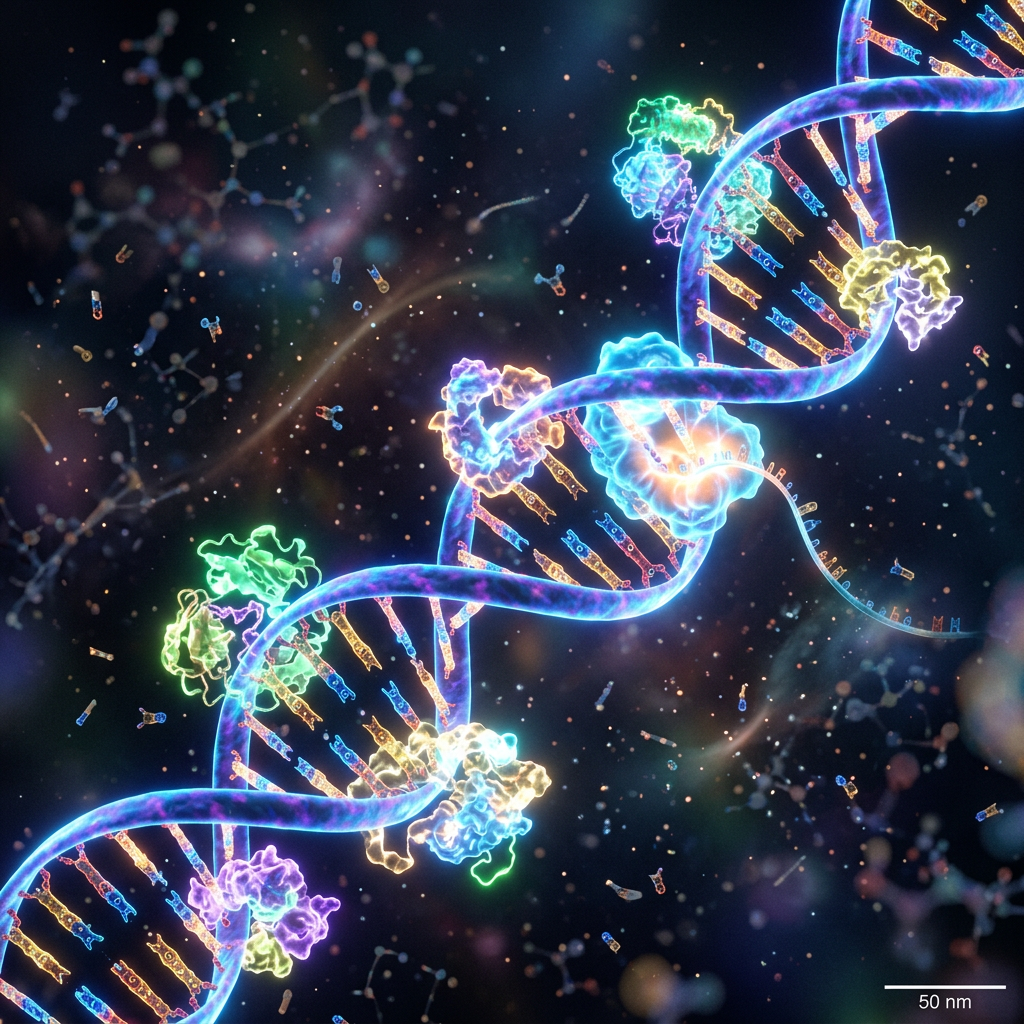
Every cell in our body has DNA. Different cells do different things. This happens because certain proteins control which genes are active and which are not. These proteins are called transcription factors and regulatory proteins. They form what scientists call the “regulome”. Understanding the regulome is important. Many genetic risk factors for diseases are located where these proteins interact with DNA.
Studying these interactions has been hard. Existing technologies have trouble detecting temporary interactions between proteins and DNA. They are not always compatible with advanced genomic tools.
As a result researchers did not have a picture of how genes are regulated in individual cells. Especially in diseases like cancer.
How D&D-seq Works
The new D&D-seq technology solves this problem. It works by attaching a protein to an enzyme. Then it does DNA sequencing. Researchers use antibodies to guide the enzyme to a target protein. When the protein binds to DNA the enzyme leaves a mark. This mark can be detected later. It shows where the protein interacts with DNA because DNA stores information; these marks are like a record of protein activity inside the cell.
The research team used D&D-seq to map the binding sites of proteins. These proteins help regulate gene expression by changing DNA structure.
New Insights Into Disease
One example was studying blood cells with a common leukemia mutation. Using D&D-seq researchers compared cells with mutated cells. They saw how the mutation changed the behavior of a protein. The technology gave a view of how gene regulation was altered by the disease-causing mutation.
These insights could be very valuable for understanding cancer and other genetic disorders.
Scientists think the findings mark the beginning of an era. They believe transcription factors and other gene-regulating proteins will become targets for future therapies. By understanding how these proteins function in cells researchers may be able to design more precise treatments.
Future Potential
A big advantage of D&D-seq is its flexibility. The technology can be added to existing research systems without requiring major changes.
This means scientists can combine DNA-protein interaction mapping with types of biological analysis. They can do this all within the individual cell.
Researchers describe D&D-seq as a technological advance. It could transform how scientists investigate biology. The team is already teaching researchers how to use the method. They plan to commercialize the technology in the future.
As scientists continue to study gene regulation D&D-seq may become one of the important tools. It can help us understand health, disease and the development of precision medicines. Its ability to reveal the hidden mechanisms controlling genes at the single-cell level opens a chapter in biological research and medical innovation. New technology, like D&D-seq is a step forward. It can help us learn more about gene-control proteins in cells.