Last Updated on April 27, 2026 by Jaspreet Kaur
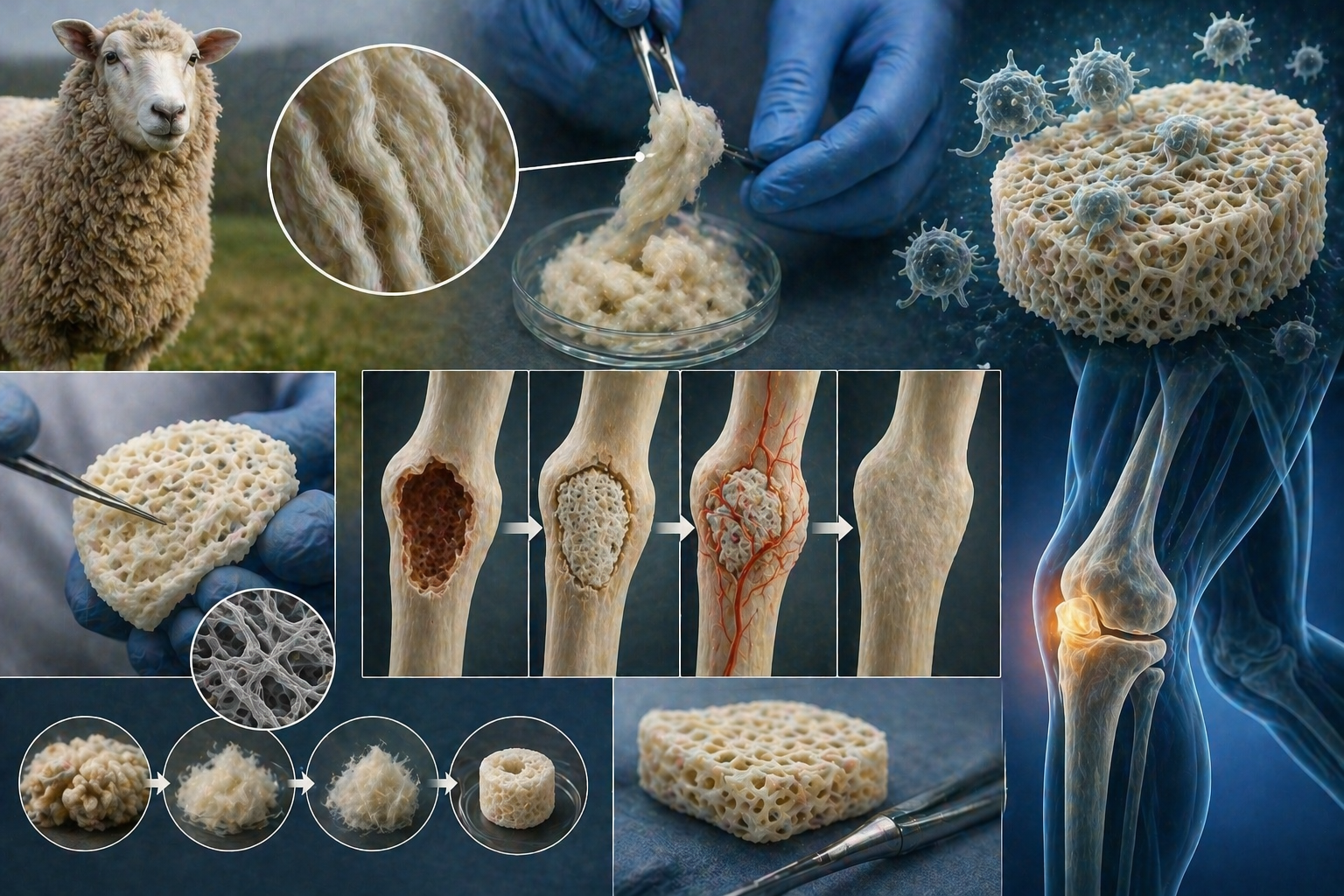
Research from King’s College London has shown that wool can be used to make a material for repairing damaged bones. This material is called keratin. It is found in wool. Scientists have done a study that shows keratin can help bones grow back in living things. The new tissue that grows is very similar to bone tissue.
This research is very important because it could change the way we do medicine especially for bones and teeth.
A Natural Alternative
Keratin is a type of protein that is found in wool, hair and nails. The scientists took keratin from wool. Made it into special membranes. These membranes help new bone tissue grow.
What is great about keratin is that it is sustainable. We can get a lot of wool from farms. It is often thrown away. This means we can make a lot of keratin without hurting the environment.
Testing in Lab and Animals
The scientists first tested the keratin membranes in a lab with bone cells. The results were very good. The cells grew well and started to form bone tissue.
Then the scientists tested the membranes in animals. They put the membranes in rats with skull defects that would not heal on their own. Over time the scientists saw that the keratin helped the bone grow back.
The results showed that keratin is very good at helping new bone grow in damaged areas. This is very important for using keratin to repair bones in people.
Comparison with Collagen
For a time collagen has been the best material for repairing bones. It helps bone tissue grow. Keeps other tissues from getting in the way.
Collagen is not perfect. It is not very strong. It can break down quickly. It is also expensive and hard to make.
In the study collagen was a little better at growing bone. Keratin was better at making the bone tissue strong and organized. This is very important for making sure the bone is healthy and strong in the term.
Stronger and More Stable
One of the things about keratin is that it is very stable. The scientists treated the keratin to make it strong. It stayed intact while the bone was healing. This is very important for making sure the bone can withstand stress.
The keratin membranes also worked well with the surrounding tissues. This reduces the risk of problems. It is very important for medical applications.
The new bone tissue also had fibers that were aligned well which makes the bone stronger and more resilient.
Sustainability Matters
Keratin is not good for medicine but it is also good for the environment. It is biodegradable. Comes from a renewable source. Wool.
Using wool to make keratin for applications could reduce waste and provide a cost-effective solution for healthcare. This is in line with the growing focus on innovation in medicine.
A Step Toward Clinical Use
This study is a step forward in regenerative biomaterials research. Showing that keratin works in a living animal model brings it closer to being used in people.
While more studies and clinical trials are needed the results suggest that keratin could one day be used to repair bones in people.
The researchers think that this technology could be especially useful for bone injuries, dental procedures and conditions that require tissue regeneration.
Looking Ahead
The development of keratin-based scaffolds opens up possibilities for bone repair. By combining effectiveness, stability and sustainability this material could change the way doctors approach treatments.
As research continues scientists are working to refine the technology and test it in more complex systems. If successful keratin could become a standard in regenerative medicine offering patients safer and more efficient healing solutions.
The wool-based biomaterial is a promising material for bone repair. The researchers are excited about the potential of wool-based biomaterial to help people with bone injuries and diseases. The wool-based biomaterial could be used to repair bones in people. It could be a sustainable and cost-effective solution for healthcare systems. The researchers are looking forward to continuing their research and developing the wool-based biomaterial, for use.