Last Updated on April 1, 2026 by Staff
Introduction
Walk into any modern kitchen and you will likely find a jar of pink Himalayan salt sitting on the counter. It looks beautiful. It sounds exotic. And it costs significantly more than the white salt beside it.
Social media is filled with claims that it contains 84 essential minerals, detoxifies the body, balances pH, and even boosts energy. But how much of this is chemistry, and how much is clever marketing?
This study breaks down exactly what Himalayan pink salt is, how it compares to regular table salt at a chemical level, what recent research says about its health claims, and whether the switch is actually worth making.
What Is Himalayan Pink Salt?
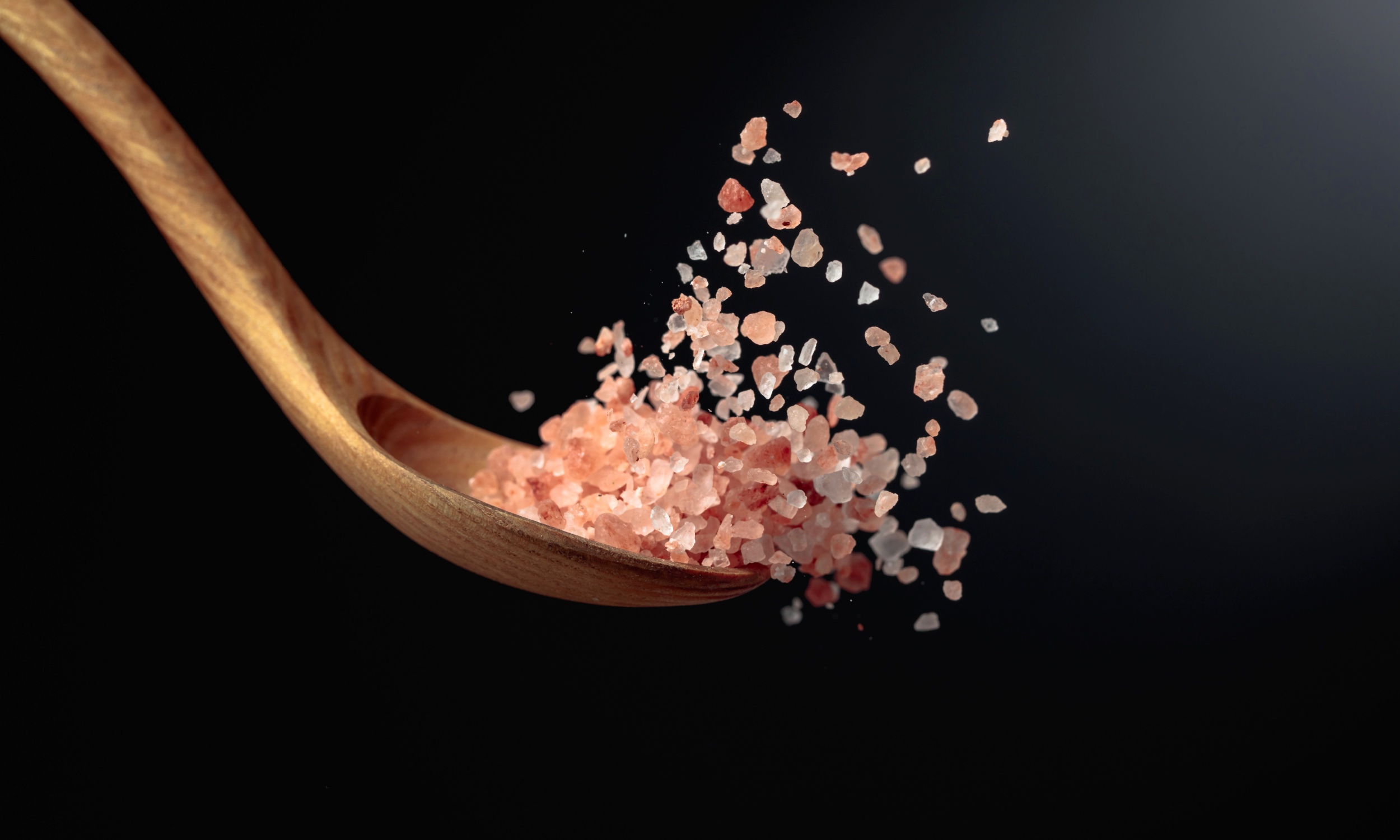
Himalayan pink salt is a type of rock salt mined from the Khewra Salt Mine in the Punjab region of Pakistan, located about 190 miles from the Himalayan mountain range. The mine is one of the oldest and largest salt deposits in the world.
The salt was formed hundreds of millions of years ago when ancient oceans evaporated and left behind mineral-rich deposits that were later compressed under geological pressure.
Its distinctive pink color comes from trace amounts of iron oxide — the same compound responsible for the reddish-brown color of rust. The salt is hand-extracted and minimally processed, meaning it reaches consumers without the refining steps that regular table salt undergoes.
What Is Regular Table Salt?
Regular table salt starts as raw sodium chloride, which is then refined to remove impurities. During processing, anti-caking agents such as sodium aluminosilicate or magnesium carbonate are added to prevent clumping. Most importantly, iodine is added to table salt in many countries, including India and the United States.
This practice, known as salt iodization, was introduced in the 1920s to combat widespread iodine deficiency and thyroid disease. In India, universal salt iodization became mandatory in 1992 because iodine deficiency was a serious public health concern, particularly in inland regions far from seafood sources.
The Chemistry: What Is Actually Inside Each Salt?
Note: Sodium shown in grams per 100g. Calcium, potassium, magnesium, and iron shown in milligrams per 100g. Values are approximate and based on laboratory spectral analyses of commercially available salts.
Both salts are, at their core, sodium chloride (NaCl). The charts above show how similar the two actually are in composition, and how small the differences in trace minerals really are.
| Property | Himalayan Pink Salt | Regular Table Salt |
|---|---|---|
| Sodium chloride content | ~97–99% | ~97–99.5% |
| Iodine | None (unless fortified) | Added (~45 mcg per gram) |
| Calcium (per 100g) | ~160 mg | ~24 mg |
| Potassium (per 100g) | ~280 mg | ~8 mg |
| Magnesium (per 100g) | ~100 mg | ~1 mg |
| Iron (per 100g) | ~38 mg | ~0.3 mg |
| Anti-caking agents | None | Often present |
| Processing level | Minimal | Highly refined |
On paper, Himalayan salt does contain more minerals. The question chemistry forces us to ask is whether those amounts are large enough to actually matter to the human body.
Do the Extra Minerals Make a Difference?
This is where marketing claims meet scientific reality. While Himalayan pink salt does contain trace minerals that regular salt does not, the quantities are so small that they are nutritionally insignificant in any realistic amount of salt consumed.
To obtain the recommended daily intake of potassium from Himalayan salt alone, a person would need to eat approximately 1.7 kilograms of it. That is a lethal amount of sodium. The same logic applies to calcium, magnesium, and iron.
As Dr. Faris Zuraikat, assistant professor of nutritional medicine at Columbia University (2026), confirmed directly: while pink salt has more minerals than iodized table salt, the quantities are so small that the amount required to benefit would far exceed the daily recommended sodium intake. Better and safer sources of these minerals exist in ordinary foods.
A 2025 clinical review by Dr. Sushil Kumar similarly concluded that these minerals exist in amounts too small to impact health in any meaningful way, and that you would need to consume dangerously high quantities of pink salt to extract a beneficial dose of them.
The One Real Chemical Difference: Iodine
Here is where the chemistry becomes genuinely important, and where switching entirely to Himalayan salt carries a real risk.
Iodine is an essential micronutrient required for the thyroid gland to produce hormones T3 and T4. These hormones regulate metabolism, heart function, temperature control, growth, and brain development. The body cannot produce iodine on its own. Himalayan pink salt contains no iodine. Regular iodized table salt is specifically formulated to deliver it consistently with every use.
A January 2026 analysis by Sophie Tseng Pellar at McGill University’s Office for Science and Society highlighted a worrying trend: as wellness culture pushes consumers toward Himalayan and specialty salts, iodine deficiency is quietly rising again in populations that had eliminated it decades ago.
A peer-reviewed study from McMaster University found that nearly 12 percent of Canadian adults already showed moderate to severe iodine deficiency. The researchers noted that public health messaging encouraging both salt restriction and reduced dairy consumption may be unintentionally making this worse.
This is not only a Western concern. A PMC study on India’s salt iodization program noted that aggressive marketing of non-iodized specialty salts — including pink Himalayan salt — is now common in India, with non-evidence-based health benefits widely promoted. The study warned that this growth poses a real risk of undermining India’s universal salt iodization programme, one of the country’s most successful public health achievements.
The concern is even more acute in pregnancy. A 2025 review published in Nutrition Reviews found that the prevalence of inadequate iodine status among pregnant women in the United States ranged from 23 to 59 percent across study cohorts, with declining median urinary iodine concentrations observed across NHANES data from 2011 to 2020.
The primary driver identified was dietary change — specifically reduced milk consumption and increased use of non-iodized specialty salts.
Note: Iodine content in table salt (~0.002%) is shown enlarged for visibility. In reality it represents a very small fraction of the total weight but provides the full recommended daily iodine intake through normal use.
The Viral “Pink Salt Trend”: What the Science Says
In 2025, the “pink salt trick” became one of the most viral wellness trends on TikTok and YouTube. Millions of videos promoted mixing Himalayan pink salt with water and lemon every morning as a metabolism booster, detox drink, hydration enhancer, and even a weight loss tool.
The scientific verdict is clear. There are no peer-reviewed studies supporting metabolic enhancement or fat-burning effects from pink salt water. Experts describe any perceived benefits as either placebo effects or temporary hydration responses from the water itself. C
laims that pink salt “detoxifies” the body, “balances pH,” or “improves adrenal function” have no mechanistic support in human physiology. The lungs and kidneys regulate blood pH within tight ranges independent of salt type.
The McGill analysis (January 2026) emphasized that such claims do not survive even casual scientific scrutiny.
Does Pink Salt Taste Different?
This is one area where there is genuine and defensible variation. Many chefs and cooks report that Himalayan pink salt has a slightly milder, more rounded flavor compared to the sharper taste of refined table salt.
This is plausibly explained by the mineral content — even in small amounts, trace minerals alter flavor perception. Iron, calcium, and magnesium can subtly reduce the harsh sharpness of pure sodium chloride.
There is also a practical consideration with crystal size. Because Himalayan salt is often sold in larger crystals, a teaspoon of it contains less sodium by weight than a teaspoon of finely ground table salt.
This means people who use it for table-side seasoning may naturally consume slightly less sodium per serving. However, the American Heart Association notes this effect disappears when pink salt is purchased in the same fine-grain size as regular table salt.
Is Pink Salt More Natural?
The claim that Himalayan salt is more natural than table salt is the one wellness argument that has genuine merit from a chemistry standpoint. It is mined with minimal processing, contains no synthetic additives, and retains its natural mineral profile. Regular table salt is refined, stripped of trace minerals, and then has iodine and anti-caking agents added back in.
Whether this makes pink salt “healthier” is a different question. The anti-caking agents in table salt are present in very small quantities and have not been shown to pose health risks at normal dietary levels. The iodine that is added back is a genuine nutritional benefit, not a negative. So “more processed” does not automatically mean “less healthy” in this context.
Who Should Be Careful About Switching?
| Group | Concern | Recommendation |
|---|---|---|
| Pregnant women | Fetal brain development requires adequate iodine | Use iodized salt or supplement iodine |
| Breastfeeding women | Iodine demand increases during lactation | Prioritize iodized sources |
| Vegans and vegetarians | Limited access to seafood and dairy iodine | Do not rely on pink salt alone |
| Inland populations (low seafood access) | Iodine intake already limited by geography | Maintain iodized salt use |
| Thyroid conditions | Iodine is critical for thyroid hormone function | Consult a doctor before switching |
The 2025 Nutrition Reviews study specifically highlighted that women of reproductive age and pregnant women are at greatest risk from iodine insufficiency, with neurodevelopmental harm to the fetus being the most serious downstream consequence.
Conclusion
Himalayan pink salt and regular table salt are both approximately 97–99 percent sodium chloride. The trace minerals in pink salt are real, but present in quantities too small to affect human health through normal consumption. The pink color is caused by iron oxide and is cosmetically interesting but nutritionally irrelevant. Claims about detoxification, pH balance, energy, and metabolism have no scientific support.
The one genuinely important chemical difference favors regular table salt: iodine. In countries like India and Canada where dietary iodine is primarily obtained through salt, switching entirely to non-iodized pink salt removes a reliable and important micronutrient from the diet — one whose absence has measurable consequences, particularly during pregnancy.
Pink salt is not harmful. Used moderately as part of a varied diet that includes other iodine sources like fish, dairy, or eggs, it is a perfectly acceptable seasoning. But it is not a health food, not a supplement, and not worth a premium price for its nutritional profile.
The most important salt habit is not choosing the right color. It is limiting total sodium intake — from all salts combined — to within the recommended 1,500 to 2,300 milligrams per day.
References
- Zuraikat, F. (2026, February). How Healthy is Pink Salt? Columbia University Irving Medical Center. columbiadoctors.org
- Tseng Pellar, S. (2026, January). Taking off the Rose Coloured Glasses: The Pink Himalayan Salt Grift. McGill University Office for Science and Society. mcgill.ca
- Mathiaparanam, S. et al. (2022). The Prevalence and Risk Factors Associated with Iodine Deficiency in Canadian Adults. Nutrients, 14(13), 2570. pubmed.ncbi.nlm.nih.gov/35807751
- Daniel, K.S. et al. (2025). Resurgence of Iodine Deficiency in the United States During Pregnancy. Nutrition Reviews, 83(10), 1944–1956. pubmed.ncbi.nlm.nih.gov/40096706
- Kumar, S. (2025, June). Pink Salt vs. Iodized Salt: A Science-Backed Comparison. AltAhar. altahar.com
- Yadav, M. & Sharma, A. (2023). India’s tryst with salt: Dandi march to low sodium salts. PMC / Indian Journal of Medical Research. pmc.ncbi.nlm.nih.gov/articles/PMC10720971
- American Heart Association. Sodium and Salt. heart.org