Last Updated on April 1, 2026 by Sanjana Kahol
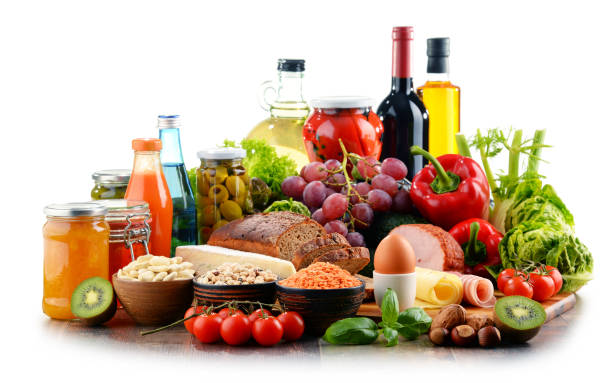
Most people think of food as something that nourishes. But the food system today involves a remarkably complex chemical landscape — one that goes far beyond the ingredients listed on the packet.
Your breakfast cereal, your canned soup, your lunchbox snack, the packaging around your sandwich — all of these involve chemicals that were not part of the human diet for most of history, and whose long-term health consequences are only beginning to be understood.
This is not a call to panic. It is a call to understand. The chemistry of what enters our bodies through food is one of the most important and least understood areas of public health, and the science published in 2025 and 2026 has made the picture significantly clearer — and more concerning.
Two Categories of Hidden Chemicals
Before diving into the research, it helps to understand that hidden chemicals in food fall into two broad categories.
The first is food additives — substances intentionally added to food during processing to improve taste, color, texture, shelf life, or appearance. These include preservatives, emulsifiers, colorants, flavor enhancers, and sweeteners. They appear on ingredient labels, often as E numbers or chemical names, but most consumers do not know what they do or what evidence exists about their safety.
The second is food contact chemicals (FCCs) — substances that migrate into food from packaging, processing equipment, storage containers, and cooking surfaces. These include bisphenols like BPA, phthalates, PFAS (“forever chemicals”), and microplastics. They do not appear on any ingredient list because they are not intentionally added — they leach in from the material world surrounding the food.
Both categories represent real, measurable exposures that are accumulating in human bodies — and both are now at the centre of major scientific and regulatory debate.
How Chemicals Enter Food Without Review
To understand why so many chemicals in food have uncertain safety profiles, you need to understand a regulatory mechanism called GRAS — Generally Recognized As Safe.
Under US law, a food manufacturer does not need FDA approval to add a new substance to food if they can argue it is “generally recognized as safe” based on existing scientific consensus. In theory, this exemption was designed for well-established substances like vinegar and salt. In practice, it has become a mechanism through which food and chemical companies routinely self-certify the safety of novel compounds — without notifying the FDA and without independent review.
A March 2026 analysis by the Environmental Working Group (EWG) found that at least 111 food chemicals had been added to the US food supply through this self-affirmation process — without informing the FDA. These chemicals appear on the ingredient labels of products sold in supermarkets across the country, including cereals, snack bars, sports drinks, and plant-based alternatives. The companies had made their own determinations that these substances were safe, keeping the details of those safety assessments proprietary.
The EWG noted that their analysis is likely just the tip of the iceberg, as many chemicals used in food are not disclosed at all, or are listed under generic names like “flavor.” Independent experts estimate there could be more than 1,000 such undisclosed chemicals currently in use. In March 2025, the Department of Health and Human Services itself acknowledged that the FDA’s system for overseeing food chemicals — particularly the GRAS loophole — is deeply flawed.
A February 2026 Pew Research survey of 5,357 US adults found that more than 70% were very or somewhat concerned about their exposure to harmful chemicals in food and water, and about 5 in 6 wanted government and business to do more to ensure chemical safety and transparency.
Preservatives: The January 2026 BMJ Study
Perhaps the most significant food chemistry research of early 2026 came from France. A landmark study published in The BMJ on 7 January 2026 (PMID 41500678), drawing on 14 years of data from the NutriNet-Santé cohort of 105,260 participants, found that higher consumption of certain food preservatives was associated with a measurably increased risk of cancer.
The researchers tracked 17 individual preservatives across an average follow-up period of 7.5 years. Six of those preservatives — all currently classified as GRAS by the FDA — were associated with higher cancer risk:
| Preservative | Common use | Associated cancer risk |
|---|---|---|
| Sodium nitrite (E250) | Bacon, ham, deli meats | +32% prostate cancer risk |
| Potassium nitrate (E252) | Cured and processed meats | +22% breast cancer, +13% all cancers |
| Potassium sorbate (E202) | Bread, cheese, wine, dried fruit | +26% breast cancer, +14% all cancers |
| Potassium metabisulfite (E224) | Wine, dried fruit, seafood | Higher cancer risk |
| Acetic acid (E260) | Pickles, condiments, sauces | +12% all cancers |
| Total sulfites (E220–E228) | Wine, fruit juice, dried foods | +12% all cancers |
It is important to understand what these percentages mean in absolute terms. McGill University’s Office for Science and Society offered essential context in January 2026: the difference between high and low preservative consumers was roughly 3% vs 3.5% cancer rates — meaning that for every 200 people who shifted from a high to a low preservative diet, approximately one cancer case might be avoided. The relative risk numbers are real, but the absolute numbers are modest.
The study’s lead researcher, Professor Mathilde Touvier of France’s National Institute of Health and Medical Research, noted that these were the first large-scale studies worldwide investigating these specific associations, and that the results need confirmation. She also emphasized that preservatives serve a real function — preventing botulism, mold, bacterial contamination — and that the benefit-risk balance must be considered carefully.
The same NutriNet-Santé cohort also published findings linking 12 of the 17 preservatives to a nearly 50% higher risk of type 2 diabetes among the highest consumers — adding metabolic disease to the roster of potential concerns alongside cancer.
Chemicals from Packaging: BPA, Phthalates, and PFAS
The food itself is only part of the exposure picture. A comprehensive review published in Nature Medicine in May 2025concluded that synthetic chemicals entering food through contact materials represent a major and underappreciated source of human chemical exposure, with mounting evidence linking them to noncommunicable diseases.
Three chemical groups dominate this category.
BPA and Bisphenols
Bisphenol A (BPA) is a chemical used in the lining of metal food cans, hard plastics, and thermal receipt paper. It was originally developed as a synthetic estrogen and is now recognised as an endocrine-disrupting chemical — meaning it interferes with the body’s hormonal signalling system even at very low doses. BPA has been associated with metabolic disorders including type 2 diabetes, cardiovascular disease, reproductive disruption, and developmental problems in children.
A study found by The New Lede noted that roughly 3,600 food contact chemicals have been detected in humans, and at least 80 — including BPA, phthalates and PFAS — are linked to health concerns. Consumer Reports testing found bisphenols in 79% of food products tested. In response, the EU banned BPA in food contact materials in 2025. The FDA has not yet taken equivalent action, though it is reviewing the evidence.
Manufacturers have increasingly replaced BPA with structurally similar compounds such as BPS and BPF — but research suggests these alternatives carry similar hormonal disruption risks.
Phthalates
Phthalates are plasticiser chemicals added to PVC and other plastics to make them flexible. They are found in food processing equipment, plastic packaging, and food wrapping. Studies show that phthalates are present in the vast majority of processed foods tested — one California-based research group found them in three-quarters of grocery store food samples.
Phthalates are endocrine disruptors linked to elevated blood pressure, insulin resistance, obesity, diabetes, and — at prenatal exposure — behavioural, attention, and learning disorders in children. A 2023 study found that children exposed to phthalates in the womb or during their first year of life were significantly more likely to develop behavioural and learning difficulties.
PFAS — “Forever Chemicals”
Per- and polyfluoroalkyl substances (PFAS) are a family of thousands of synthetic chemicals used to make food packaging grease-resistant and non-stick cookware, water-resistant. They are called “forever chemicals” because the carbon-fluorine bond they are built on is one of the strongest in chemistry — essentially impossible to break down in the environment or in the human body.
PFAS have been linked to impaired immune system function, thyroid disease, elevated cholesterol, kidney and testicular cancer, metabolic changes, and liver damage. They have now been detected in human blood, breast milk, and organ tissue globally. The FDA announced in early 2025 that PFAS would no longer be used in food packaging coatings, though transitioning all products off the market took until mid-2025.
The Scale of the Problem: $2.8 Trillion Per Year
A December 2025 report by Systemiq titled Invisible Ingredients provided the most comprehensive global economic assessment of four key chemical groups — phthalates, bisphenols, pesticides, and PFAS — in the food system. The report estimated that these chemicals cause approximately $2.2 trillion per year in health costs globally through disease treatment and lost productivity, with an additional $640 billion per year in environmental costs. The total figure of $2.8 trillion annually almost certainly understates the true impact, as it excludes many indirect costs and the effects of chemical mixtures.
The report also made a striking projection: under a current-exposure scenario, these chemicals could contribute to 200–700 million fewer births globally between 2025 and 2100 through fertility disruption. No region was identified as spared from these effects.
Crucially, the report found that reducing these chemicals is both technically feasible and cost-effective. Past regulatory action has shown that when governments set clear rules, industries adapt — often at lower costs than anticipated. Existing policies and technologies could reduce combined harms by approximately 70%, delivering up to $1.9 trillion in annual global savings.
Everyday Chemicals and the Gut Microbiome
A December 2025 study from the University of Cambridge, published via ScienceDaily, added another dimension to the hidden chemical story.
Using a large laboratory investigation combined with a machine learning model, researchers identified 168 common chemicals that can disrupt the growth of beneficial gut bacteria — many of which were never previously suspected of affecting living organisms.
These chemicals include substances found in food, water, and household products. The researchers noted that gut bacteria are almost certainly coming into contact with these substances through food and drinking water, though the exact amounts reaching the gut are not yet quantified.
The study’s lead researcher stated directly: “Safety assessments of new chemicals for human use must ensure they are also safe for our gut bacteria.”
This finding is particularly significant because it connects the food chemistry problem to everything we already know about the gut microbiome’s role in immunity, metabolism, mental health, and systemic inflammation.
What Can You Actually Do?
The honest answer is that you cannot avoid all chemical exposure through diet — PFAS contamination of water supplies and food crops means that even people eating primarily organic whole foods carry these substances in their bodies. But the science does point to meaningful ways to reduce exposure:
reducing consumption of processed and packaged foods lowers exposure to both intentional additives and food contact chemicals simultaneously;
avoiding heating food in plastic containers reduces phthalate and BPA migration, since heat accelerates chemical transfer;
choosing fresh or frozen foods over canned products reduces BPA exposure from can linings; limiting processed meats reduces nitrite exposure, which has the strongest and most established cancer evidence of any preservative;
choosing products with short, recognisable ingredient lists reduces exposure to the longest tail of novel, unreviewed compounds; and being aware that “natural” on a label does not mean free from chemicals — it has no regulatory definition for products other than meat.
The Regulatory Landscape in 2025–2026
Significant regulatory movement is underway. In 2025 the FDA banned Red Dye No. 3 from food. The EU banned BPA and all hazardous bisphenols in food contact materials. The FDA began phasing out PFAS in food packaging coatings.
In the US, more than 30 states introduced food chemical bills in 2025, with new laws passed in Arizona, Louisiana, Texas, Utah, Virginia, and West Virginia. Federal legislators have introduced bills to close the GRAS loophole and require mandatory FDA review of food chemicals.
The direction of travel is clearly toward tighter oversight. But the pace of regulatory change is slow relative to the scale of chemical exposure, and the science identifying harms is consistently ahead of the policies designed to address them.
Conclusion
The hidden chemicals in everyday foods represent one of the most significant and least publicly understood areas of modern health science. They enter the body through ingredients we cannot see listed on labels, through packaging we do not think of as part of the meal, and through processing systems invisible to the consumer.
The research published in 2025 and 2026 has made clear that this exposure is real, measurable, and in several cases, meaningfully associated with serious health outcomes including cancer, metabolic disease, hormonal disruption, and microbiome damage.
None of this means that eating processed food will definitively cause disease, or that a single can of soup will harm you. The risks are probabilistic, cumulative, and shaped by overall dietary patterns.
But understanding that these chemicals exist, where they come from, and what the science says about them is an important foundation for making more informed choices — both individually and as citizens pressing for better food system regulation.
References
- Environmental Working Group. Secret GRAS: How 100+ Food Chemicals Bypassed Government Safety Review.(March 2026) ewg.org
- Hasenböhler, A. et al. (2026). Intake of food additive preservatives and incidence of cancer: results from the NutriNet-Santé prospective cohort. BMJ, 392, e084917. PMID 41500678. pubmed.ncbi.nlm.nih.gov/41500678
- Touvier, M. et al. (2026). NutriNet-Santé: Food Preservatives and Type 2 Diabetes. Nature Communications. cnn.com
- Scheringer, M., Touvier, M. & Trasande, L. (2025). Health impacts of exposure to synthetic chemicals in food.Nature Medicine, 31(5), 1431–1443. pmc.ncbi.nlm.nih.gov/articles/PMC12442484
- Systemiq. Invisible Ingredients: A Global Assessment of Toxic Chemicals in the Food System. (December 2025) systemiq.earth
- University of Cambridge / ScienceDaily. 168 Common Chemicals Disrupt Beneficial Gut Bacteria. (December 2025) sciencedaily.com
- Pew Charitable Trusts / Ipsos. Americans Are Concerned About Harmful Chemicals in Food, Water and Everyday Products. (February 2026) pew.org
- Washington Post. How We Ingest Plastic Chemicals While Consuming Food. (December 2025) washingtonpost.com
- McGill University Office for Science and Society. Food Preservative Linked to Cancer — Context and Analysis.(January 2026) mcgill.ca
- The New Lede. FDA Must Fix Food Packaging Rules for MAHA to Matter. (November 2025) thenewlede.org


Leave a Reply