Last Updated on August 6, 2026 by Sanjana Kahol
Global food systems face growing pressure from a combination of rising populations, climate change, shrinking natural resources, and the continuing challenge of hunger.
At the same time, many people are searching for foods that provide more nutrition while placing less strain on the environment.
One tiny organism has attracted growing attention as a possible part of that solution.
Spirulina, a blue-green microorganism that has been eaten for centuries, is increasingly being studied for its impressive nutritional value and its potential role in future food production.
A new review brings together hundreds of previous studies to examine what spirulina offers, where it may be useful, and which questions still need answers.
Why food must change
Feeding the world’s growing population has become more difficult as farmland, fresh water, and other natural resources come under increasing pressure.
According to the review, millions of people still experience hunger and poor nutrition, while current food production also contributes to environmental problems such as greenhouse gas emissions and biodiversity loss.
These challenges have encouraged researchers to look for new sources of protein that require fewer resources than traditional animal farming.
The review describes this idea as a “new protein economy,” where alternative foods could help improve nutrition while reducing environmental impacts.
Among the many possibilities, spirulina has emerged as one of the most promising. It grows quickly, can survive in harsh environments, and contains a remarkable range of nutrients in a relatively small amount of biomass.
What spirulina is
Although spirulina is often called an algae, it actually belongs to a group of microscopic organisms known as cyanobacteria. These tiny organisms use sunlight to grow, much like plants, and have long been harvested as food in some parts of the world.
Today, the two species most commonly used in food production are Arthrospira platensis and Arthrospira maxima. According to the review, both have been extensively studied and are generally recognized as safe for human consumption.
Spirulina is now widely sold as a dietary supplement in the form of powders, tablets, and drinks. Interest has expanded well beyond supplements, with food manufacturers investigating ways to add it to everyday foods.
Packed with nutrients
One reason spirulina has gained so much attention is its unusually rich nutritional profile. The review reports that protein makes up about 55% to 70% of its dry weight, making it one of the richest natural protein sources currently available.
Proteins are made from smaller building blocks called amino acids, which the body uses to build muscles, repair tissues, and support many essential functions. Spirulina contains all of the essential amino acids that people must obtain through food.
The review also describes spirulina as a good source of vitamins and minerals, including B vitamins, iron, calcium, magnesium, and potassium. These nutrients help support processes such as energy production, bone health, oxygen transport, and normal immune function.
In addition to vitamins and minerals, spirulina contains dietary fiber, healthy fats, and natural pigments. Pigments are the colorful compounds that give organisms their appearance, but many also have biological activities inside the body.
Natural compounds matter
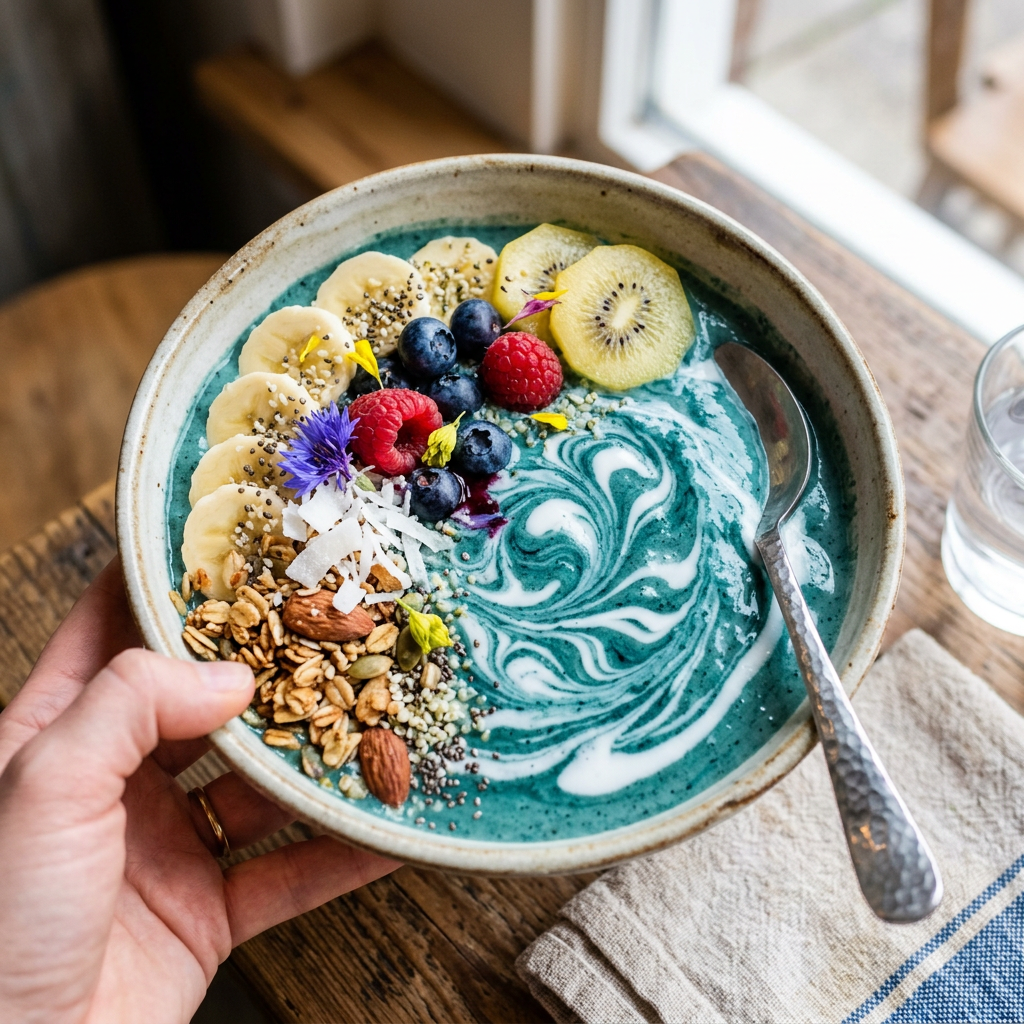
Among spirulina’s best-known compounds is C-phycocyanin, the bright blue pigment responsible for much of its color. The review also highlights chlorophyll, beta-carotene, and several naturally occurring plant chemicals called phenolic compounds.
Many of these substances act as antioxidants. Antioxidants help protect cells from unstable molecules called free radicals, which are naturally produced during normal metabolism and can damage cells if they build up faster than the body can control them.
Because of these compounds, spirulina has attracted interest for a wide range of possible health benefits. However, the review emphasizes that many of these findings come from laboratory experiments, animal studies, or relatively small human studies rather than large clinical trials.
Possible health roles
The review summarizes evidence suggesting that spirulina may help support heart health, blood sugar control, body weight management, gut health, and healthy inflammatory responses. Inflammation is the body’s normal reaction to injury or infection, but long-lasting inflammation may contribute to some chronic diseases.
The authors also discuss spirulina’s possible role in reducing oxidative stress. Oxidative stress happens when harmful molecules called free radicals outnumber the body’s natural defenses, potentially damaging cells over time.
Although these findings are encouraging, the review does not conclude that spirulina prevents or treats disease. Instead, it points out that larger, well-designed human studies are still needed to confirm its safety, effectiveness, and the most appropriate doses for different health conditions.
The review was conducted by researchers from Wolkite University, Arba Minch University, Wachemo University, Jigjiga University, Jiangsu University, and The University of Queensland.
The study is published in the journal Food Research International: Reports.


Leave a Reply