Last Updated on July 22, 2026 by Staff
For a long time people thought that insects found food using simple instincts. When a fruit fly smelled fruit people assumed it just turned towards the smell and followed it. A new study has changed the way we think about this
Researchers at Rockefeller University found out that fruit flies use an advanced way of finding food based on memory. They do not just follow the smell, they remember where the smell was coming from and use that information to keep looking for food even when the smell is gone.
The study, which was published in the journal Nature shows that fruit flies do complicated thinking when they are looking for food. This means that even animals with small brains can navigate very well.
Smell Becomes Memory
Fruit flies are very good at finding fruit from far away. Even when they can only smell it a bit they can still find the food very easily.
Scientists wanted to know how they did this because smells can change direction easily. They discovered that fruit flies do not just move towards every smell they detect. Instead they move along the edge of the smell. Every time they enter and leave the area with the smell they remember the direction of the smell.
This helps the fruit fly to keep looking for food in the direction even if the smell is gone for a little while. Fruit flies do not just react to what they smell, they remember where the smell was.
Virtual Reality Test
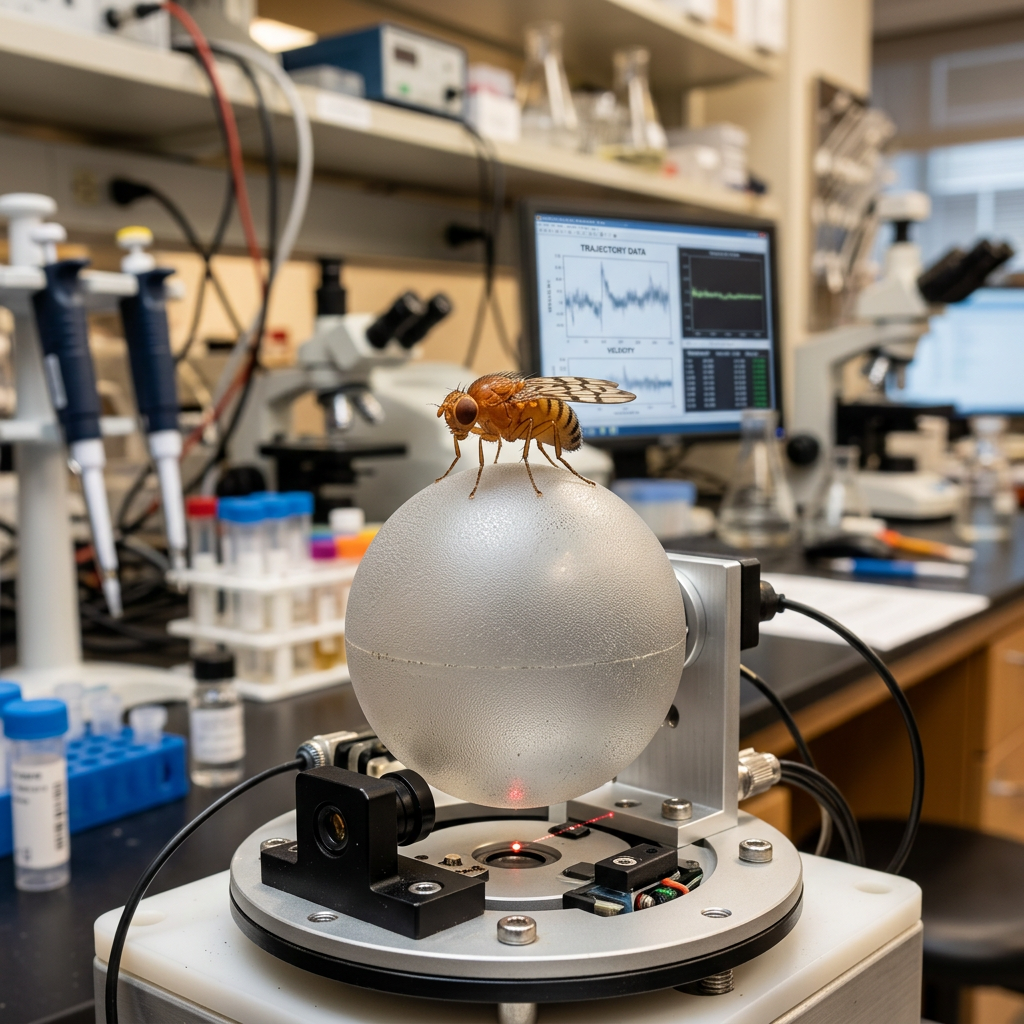
To study this researchers built a virtual reality system for fruit flies. Each fly walked on a ball that was like a treadmill. The scientists controlled the wind. Smell using special equipment.
They used apple cider vinegar, which fruit flies like much instead of real fruit. This way the scientists knew exactly what each fly was smelling.
The results were surprising. The fruit flies did not walk directly through the middle of the smell, they walked along the edge of the smell. They kept entering and leaving the area with the smell. Then going back to the edge.
The researchers called this behavior “edge tracking”.
Flexible Navigation
To see if this really worked the scientists changed the conditions of the experiment. They moved the smell away from the wind. Changed its position. The fruit flies still found the smell.
The researchers also made the smell behave like it does in life, where the wind breaks it up into small pieces. The fruit flies still found the smell. Went back to walking along the edge.
This showed that fruit flies do not just use the wind to find the smell they use their memory too.
Brains Internal Compass
The researchers also looked at what was happening inside the fruit flies’ brains. They looked at a part of the brain that helps with navigation.
They found nerve cells that pointed in the direction the fruit fly was moving when it was in the area with the smell. When the fruit fly left the area the nerve cells pointed back, to the edge of the smell. This showed that the brain was storing a memory of the direction of the smell. When the researchers stopped these nerve cells from working the fruit flies could not find the smell again.
This proved that the fruit flies were using memory, not instinct to find the smell.
Why It Matters
This discovery has changed the way scientists think about how insects navigate. Fruit flies are not just machines that react to smells, they make mental maps to help them find food.
The same part of the brain that fruit flies use to navigate is also used by ants and bees. This means that different insects may use ways to solve navigation problems.
This study could also help with robotics and artificial intelligence. Robots could use memory to navigate by just using sensors.
The study shows that you do not need a brain to be smart. Even a small fruit fly can use memory and decision-making to solve difficult navigation problems. Scientists think that this study could help us understand how small brains work and how animals navigate.