Last Updated on July 10, 2026 by Staff
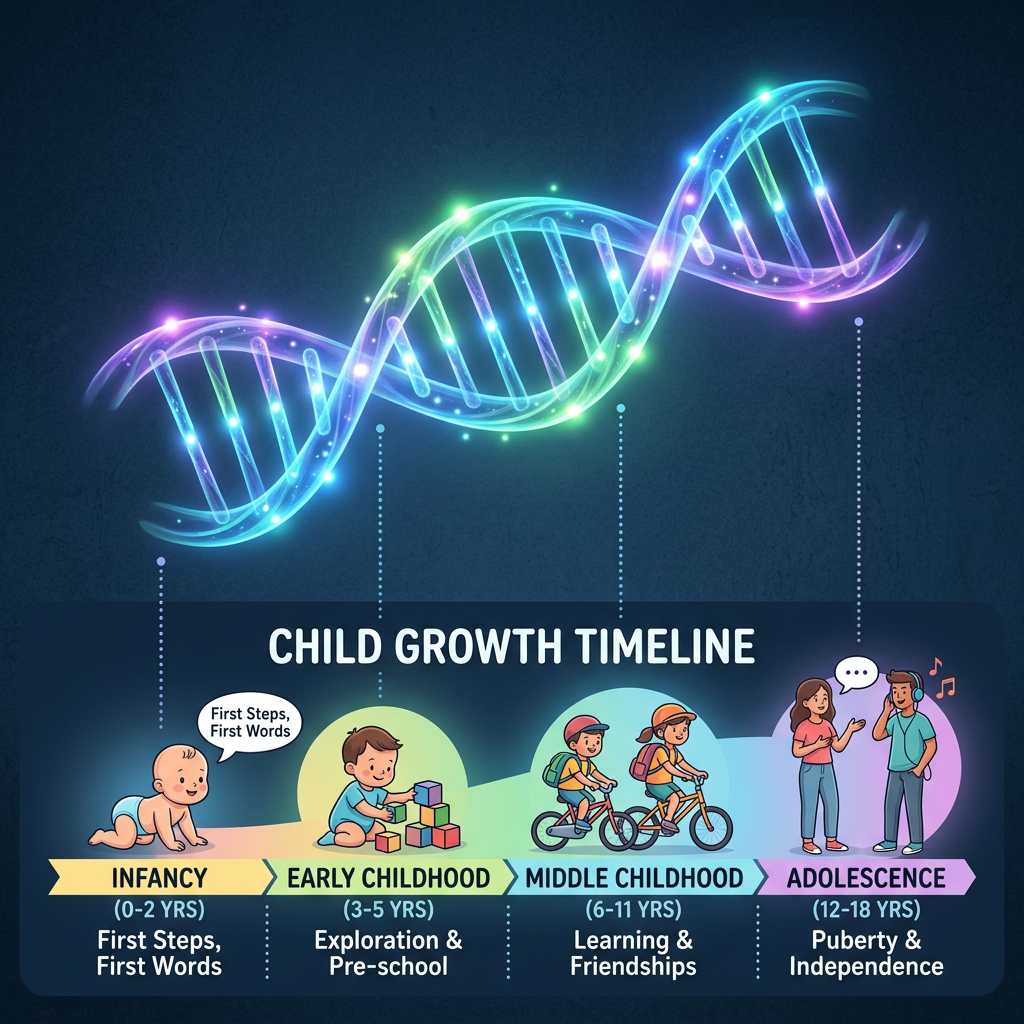
A new study has found that different types of variations affect children’s cognitive abilities at different stages of life. The study found that DNA variants have the biggest impact on intelligence during early childhood. On the other hand , the influence of common genetic variants gets stronger as children get older.
The research was done by scientists at the Wellcome Sanger Institute, was published in Nature Human Behaviour. They looked at cognitive data from thousands of children in long-term UK birth studies. The team wanted to know how genetics affects learning and thinking abilities from childhood to adolescence.
The findings may also explain why some parents have genetic mutations linked to intellectual disability but do not show any symptoms themselves.
The Genetic Puzzle
We all inherit thousands of variations from our parents. Some of these changes are common. Found in many people. Others are very rare.
Rare DNA variants can sometimes damage genes and have been linked to conditions such as intellectual disability. However many parents have these rare variants but appear completely healthy.
This is known as penetrance. It means that a disease-causing genetic mutation does not always lead to the condition.
The researchers wanted to know if the effects of these genetic differences change as children grow. They also wanted to know if this could explain why some people remain unaffected.
Large-Scale Analysis
The research team looked at data from 6,495 children who participated in the Children of the 90s (ALSPAC) study in the United Kingdom.
They compared each child’s information with their IQ scores at ages 4, 8 and 16 years. They also used data from the Millennium Cohort Study. The UK Biobank to verify their findings.
Early vs Later Effects
One of the study’s important discoveries was that the influence of these two types of genetic variants changes over time.
Rare DNA variants had their impact on children’s cognitive ability at four years of age. However their effect got weaker as children grew older. By age sixteen the effect was significantly reduced.
On the other hand common genetic variants showed the opposite pattern. Their influence on intelligence got stronger throughout childhood and adolescence.
The researchers believe this shows that early brain development is especially sensitive to genetic mutations. Common genetic factors continue to shape learning and thinking abilities over a period.
These findings show that early childhood is a stage for understanding how genetics influences cognitive development.
Beyond Genetics
The study also looked at the effects of genetics compared to social influences on children’s intelligence.
The researchers found that the impact of genetic variants on IQ was at least as strong as the association between children’s cognitive performance and parental education.
The influence of damaging variants was similar in size to other important risk factors, such as premature birth and maternal illness during pregnancy.
Unlike factors the impact of rare genetic mutations got weaker as children aged.
This suggests that some children may compensate for genetic disadvantages as their brains develop. This could reduce the long-term effects of rare mutations.
Why It Matters
The findings could help explain why some people carrying DNA variants linked to intellectual disability never develop noticeable symptoms.
If the strongest effects occur during the years of life some children may naturally overcome these challenges as they grow older.
The researchers believe this insight could improve studies of intellectual disability, autism and other neurodevelopmental conditions. They think that focusing on childhood could be key.
The study also shows the value of combining long-term health records with genetic sequencing. This can help us better understand development.
As more genetic data from population studies become available scientists hope to learn how genetics interacts with environmental factors throughout life.
Ultimately the research shows that intelligence is influenced by both and common genetic variations. However their effects are not fixed. Instead genetics shapes development differently at different ages. This offers opportunities for early diagnosis, personalized support and a deeper understanding of how children learn and develop.