Last Updated on June 13, 2026 by Staff
Resistance has become a major public health threat. It happens when bacteria, viruses, fungi and parasites change and become resistant to medicines that once worked. As a result common infections become harder to cure leading to illnesses, higher medical costs and more deaths.
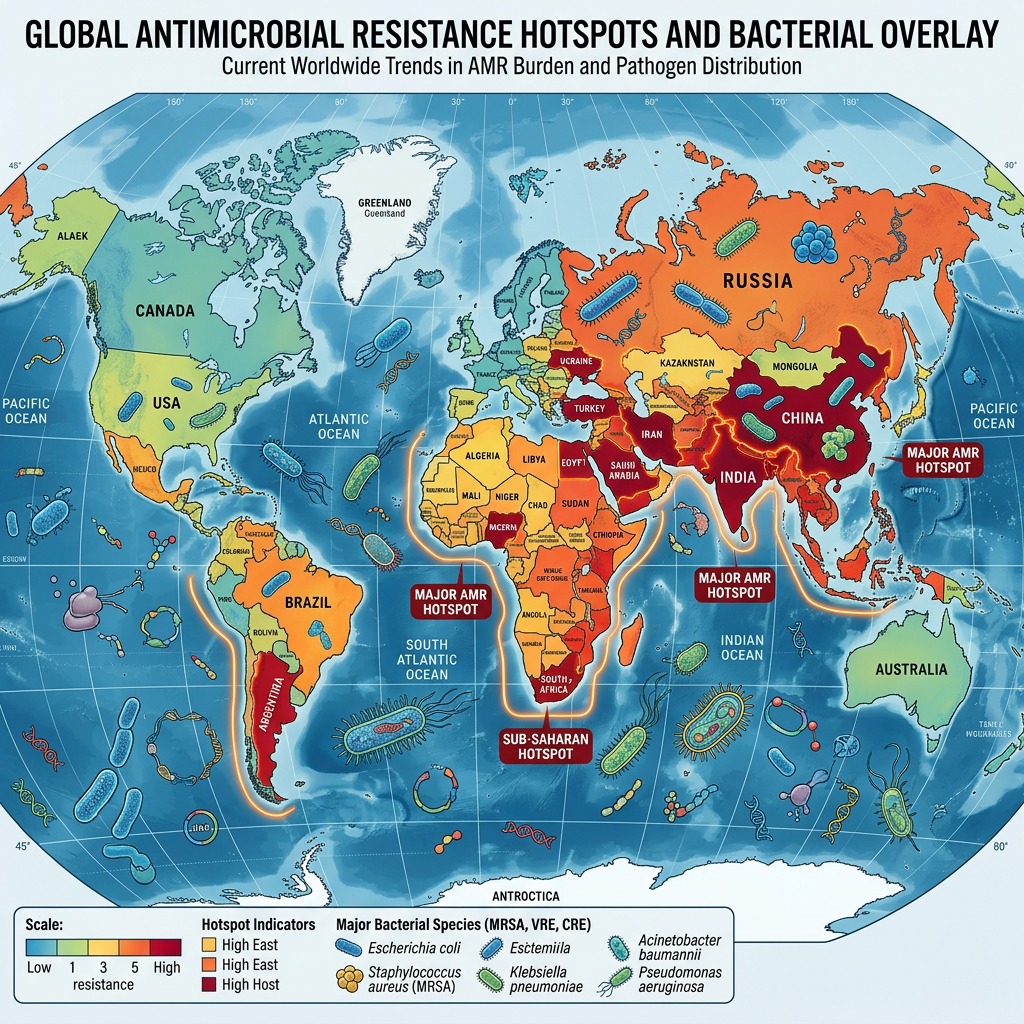
Health experts think antimicrobial resistance could cause 39 million deaths worldwide between 2025 and 2050 if we don’t take action. However antimicrobial resistance is not caused by one thing. It involves a mix of bacteria, resistance genes, environment, health systems and socioeconomic factors.
To understand risks researchers from Kings College London did a study using machine learning to identify which resistance traits are likely to become major global threats.
Massive Analysis
The study, published in Cell Genomics, looked at 16 species identified by the World Health Organization as critical priority pathogens. These included bacteria like Klebsiella, Acinetobacter and Escherichia coli which cause infections and are hard to treat.
Researchers analyzed over 45,000 genomes from 127 countries. They used machine learning to identify which resistance genes were linked to resistance.
The team then looked at over 1,000 health, economic and social indicators. These factors included poverty levels, population density, sanitation and health care access. By combining information with these trends scientists forecasted how resistance patterns may evolve.
This approach allowed researchers to predict threats before they spread.
Key Findings
The study identified 210 pathogen- antimicrobial resistance traits that are projected to increase by 2050. These researchers highlighted 32 high-risk threats that need attention.
These high-risk traits were chosen because they appear in WHO priority pathogens can spread easily and are found in humans and animals. Their mobility makes them dangerous.
The analysis showed that these resistance mechanisms are linked to changes in global living conditions. Many concerning traits are expected to spread in regions with poor sanitation, overcrowding and limited health care.
The findings suggest that resistance is not a biological problem but also a social and environmental issue.
Drivers Of Resistance
One discovery was the strong connection between socioeconomic conditions and antimicrobial resistance.
Researchers found that poverty, poor sanitation and unequal access to health care were among the predictors of increasing resistance. These conditions create environments where infections spread easily and antibiotics are often misused.
The study also showed that many high-risk resistance genes are highly mobile. This means they can transfer between species and move through humans, animals and the environment.
Experts emphasize that reducing use alone will not solve the problem. Broader improvements in public health infrastructure and living conditions are equally important.
Future Action
Researchers believe their findings provide a roadmap for global efforts against antimicrobial resistance. By identifying which resistance traits are likely to expand and understanding the factors driving their spread governments and health organizations can focus resources where they are needed.
The study supports a shift from responses to proactive prevention. Health authorities can strengthen surveillance systems, improve sanitation and invest in health measures.
Scientists hope this research will guide policies and international cooperation aimed at controlling one of the greatest health challenges. As antimicrobial resistance continues to evolve combining genomics, artificial intelligence and socioeconomic analysis may become a tool for protecting global health.
Leave a Reply