Last Updated on May 13, 2026 by Jaspreet Kaur
For a long time scientists thought they knew how tiny viruses spread from one person to another. Some of these viruses called deltaviruses are too small to survive on their own. They need viruses, called helper viruses, to give them a protective coating so they can infect cells.
The hepatitis D virus is an example of this. It needs the hepatitis B virus to spread inside the body.
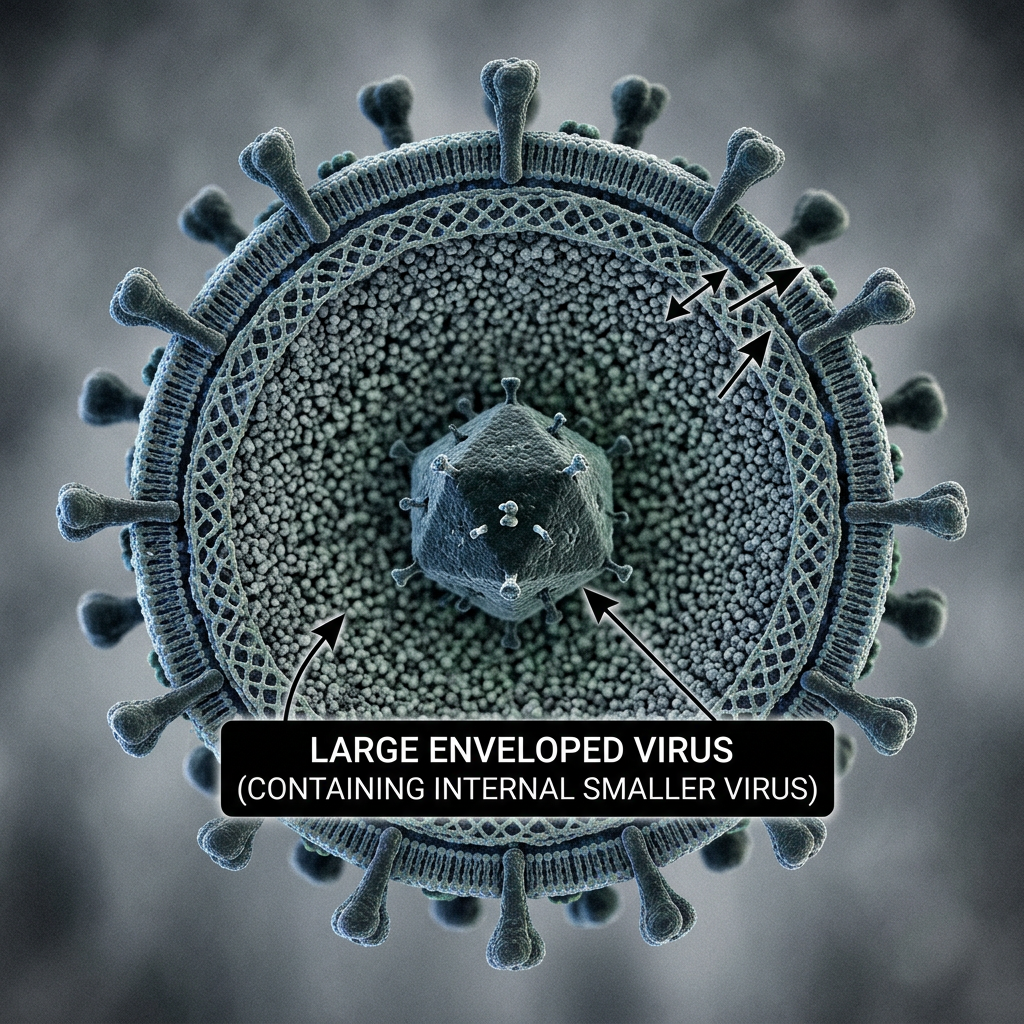
A new study has found something really surprising. Deltaviruses are not just borrowing a coating from helper viruses. They are actually hiding inside viruses like Trojan Horses to get into cells.
This new research, published in the journal *Cell* changes what scientists thought about how viruses spread. It might explain how these tiny viruses get into parts of the body that we did not think they could like the brain.
Viral Hitchhikers
Deltaviruses are very simple. They have the basics to infect cells. They need help to spread because their genetic material is not enough to do the job.
Before scientists thought deltaviruses spread by borrowing a coating from another virus.. This new study shows that it is more complicated than that.
Scientists tried this with a few helper viruses, like herpesvirus and a virus that affects snakes. They infected cells with both the helper virus and the deltavirus. Then they looked at the viruses that were produced.
What they found was surprising. The deltavirus was actually inside the helper virus.
Inside the Trap
The scientists used tools to look at the viruses. They saw that the helper virus was like a package that had the deltavirus inside. It was like a vehicle that had a passenger.
They then tested whether these packaged viruses could infect cells. The results were clear. Only the viruses that had the deltavirus could infect new cells.
This shows that hiding inside another virus is a way for deltaviruses to survive and spread.
Beyond the Liver
scientists thought that deltaviruses only affected the liver.. This new study suggests that they might be able to spread to other parts of the body. They might even be able to infect animals.
Scientists have already found deltaviruses in animals like rodents and birds. They were in parts of the body that were not the liver. This makes us wonder how they got there.
The idea that deltaviruses can hide inside viruses might be the answer.
Future Questions
This discovery raises a lot of questions. Scientists want to know if deltaviruses are hiding in people and animals without us knowing. They want to find out which helper viruses can carry deltaviruses.
They also want to know if having two viruses at the time makes the disease worse.. Maybe it changes how the viruses interact with the body.
This is a change in how we think about viruses. It shows that they can work together in ways. What seemed like a way for viruses to spread is actually much more advanced. One virus can hide inside another to survive and spread.
This discovery shows that even the smallest viruses can come up with ways to survive. It reminds us that there is still a lot to learn about the world of viruses.